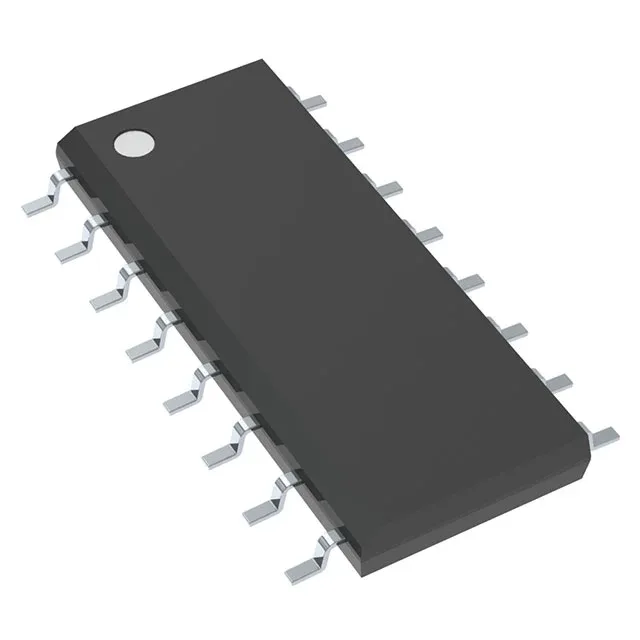
5V RS232 transceiver in 16-SOIC — what you get
The Texas Instruments MAX232DE4 is a full-duplex RS232 transceiver in a 16-SOIC (3.90 mm width) package, handling two drivers and two receivers. This is the classic MAX232 architecture, widely second-sourced and field-proven for decades.
The 120 kbps ceiling is the maximum guaranteed data rate across temperature and supply corners. For a UART running at 115200 baud (a common RS232 speed), the transceiver has about 4% margin — fine for most designs. If your application needs 250 kbps or 1 Mbps, this part won't close the link; you'd step up to a MAX3221 or MAX3232 family device. The 500 mV hysteresis on the receiver inputs provides noise immunity on longer cable runs, reducing bit errors in electrically noisy environments.
Supply and temperature — fit check
This transceiver is strictly 5 V ±10% — no 3.3 V operation. If your board runs a 3.3 V rail only, look at a 3.3 V RS232 part like the MAX3232. The 16-SOIC footprint is industry-standard, pin-compatible with the original MAX232 and most second-source equivalents.
The base product number MAX232 is one of the most widely second-sourced RS232 transceivers, so alternate sourcing (e.g., from TI, Maxim, or Sipex) is straightforward if dual-sourcing is part of your risk plan.