Precision op-amp with 20 µV offset — still in active production
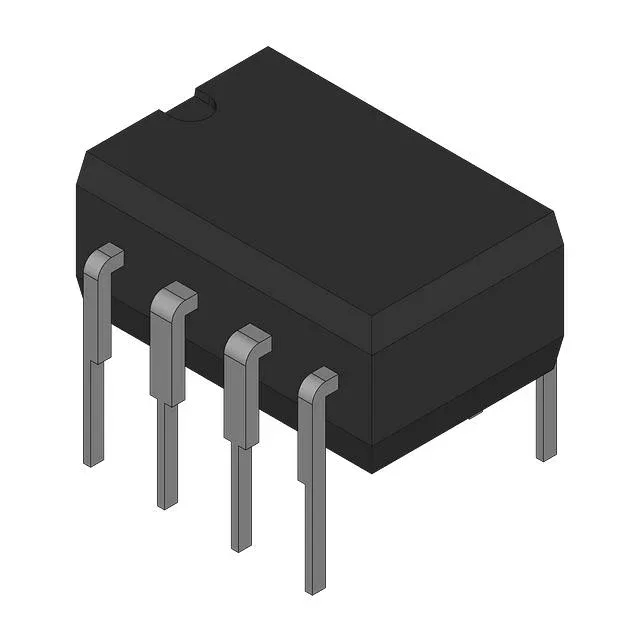
Its headline spec is a 20 µV maximum input offset voltage, which puts it squarely in the precision category — the kind of offset that lets you resolve microvolt-level signals without a separate auto-zero stage. Gain-bandwidth product runs 8 MHz, and the slew rate is 2.5 V/µs, enough for clean 20 kHz audio paths and moderate-speed control loops. Supply span stretches from 8 V to 44 V, so it handles ±15 V dual rails or a single 24 V industrial bus without a secondary regulator. The part is in an 8-pin DIP package (0.300" body, 7.62 mm pitch) with through-hole leads, intended for socketed or hand-soldered boards, prototype runs, and legacy maintenance builds.
8 V to 44 V supply — wide-rail flexibility for industrial and audio
The 8 V minimum supply means the LT1037CP does not run from a 5 V single rail — it needs at least ±4 V or a single 8 V bus. The 44 V maximum covers ±15 V supplies with headroom, and even 24 V industrial rails. This wide span is useful when the op-amp must swing near the rails without clipping, or when the same part is used across multiple board variants with different supply voltages. The 15 nA input bias current is bipolar-typical; it will show a DC voltage drop across high-source-impedance paths, so keep feedback resistors in the low-kΩ range to avoid offset errors.
Through-hole 8-DIP — legacy and prototype fit
It fits sockets, stripboard, and hand-assembled prototypes. For a rework tech, the DIP body is easy to extract with a manual puller or hot-air station — no risk of lifting pads on a two-layer board. The bulk shipping medium means parts arrive loose in a bag, not on a reel; plan for manual kitting or tube handling if you need pick-and-place for a panelized run.