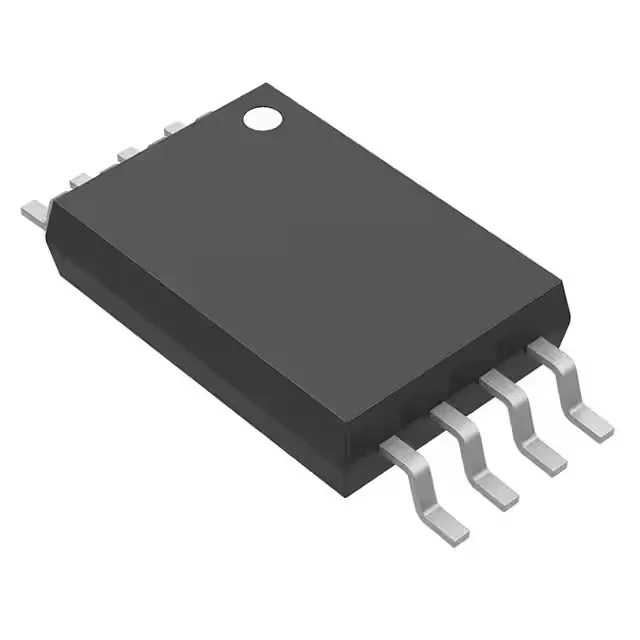
Texas Instruments LT1004IPWR-2-5 — Discrete Semiconductors

Texas Instruments LT1004IPWR-2-5 Shunt Reference, 2.5V

MPNLT1004IPWR-2-5
End of Life

Texas Instruments LT1004-2.5 series, micropower shunt voltage reference, LT1004IPWR-2-5, 2.5V fixed output, ±0.8% tolerance, 20ppm/°C, 8-TSSOP surface mount, bulk.

$0.62Ref. price · indicative, final on quote
Packaging8-TSSOP (0.173", 4.40mm Width)
Independent supplier — new & surplus stockAuthenticity-screened · ESD-safe packingListing updated Aug 2026

Specifications

LT1004IPWR-2-5 specifications
ParameterValue
Output typeFixed
MountingSurface Mount
Reference typeShunt
Voltage - output (Min (Fixed))2.5V
Output current20 mA
Current - cathode20 µA
Operating temperature-40°C ~ 85°C (TA)
PackageBulk
Tolerance±0.8%
Case8-TSSOP (0.173\", 4.40mm Width)
Noise - 10Hz to 10kHz120µVrms
Temperature coefficient20ppm/°C Typical

Product details

2.5V shunt reference with 20 µA cathode current

The LT1004IPWR-2-5 is a 2.5V fixed-output shunt voltage reference from Texas Instruments' LT1004-2.5 series, designed for micropower bias and precision clamp applications where the load current is drawn through the reference itself.

Tolerance, drift, and noise — the accuracy budget

Initial tolerance is ±0.8% at 25°C, which for a 2.5V reference translates to a ±20 mV window — this sets the worst-case voltage the downstream ADC or comparator sees before any temperature or aging effects.

Frequently asked questions

What is the LT1004IPWR-2-5 tolerance and how does it affect circuit accuracy?

The LT1004IPWR-2-5 has an initial tolerance of ±0.8% at 25°C, which for a 2.5V output means the reference voltage can vary by ±20 mV from unit to unit. This sets the baseline accuracy for the ADC or comparator reference before temperature drift and aging are factored in.

Will the LT1004IPWR-2-5 drop into a board designed for the LM4040CIM3-3.0/NOPB?

No — the LM4040CIM3-3.0/NOPB is a 3.0V reference in a SOT-23-3 package, while the LT1004IPWR-2-5 is a 2.5V reference in an 8-TSSOP. The output voltage and pinout differ; a board spin is required.