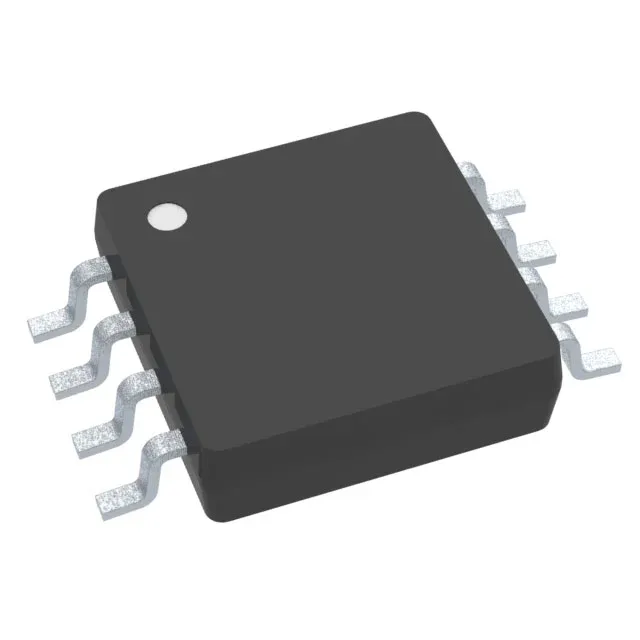
Texas Instruments LPV812DGKR — Logic ICs

Texas Instruments LPV812DGKR Dual Nanopower Op-Amp, 8 kHz

MPNLPV812DGKR
End of Life

Texas Instruments LPV812DGKR, dual general-purpose op-amp, 8 kHz gain bandwidth, 0.0021 V/µs slew rate, 425 nA supply per channel, rail-to-rail output, 8-VSSOP package, -40°C to 125°C.

$2.88Ref. price · indicative, final on quote
Packaging8-TSSOP, 8-MSOP (0.118", 3.00mm Width)
StockContact for availability
MOQ1 pcs
  • 100% new & originalTraceable channels only — no refurbs, no pulls, no remarked parts.
  • Date & lot codes on quoteStated per line before you commit; label photos on request.
  • MSL-compliant ESD packingMoisture-sealed bags with indicator cards; reels photo-verified.
  • PayPal buyer protectionPay by T/T, PayPal or Payoneer — card payments covered end to end.

Specifications

LPV812DGKR Technical Specifications
ParameterValue
Output typeRail-to-Rail
Mounting typeSurface Mount
Amplifier typeGeneral Purpose
Voltage - input offset55 µV
Voltage - supply span5.5 V
Current - supply425nA (x2 Channels)
Current - input bias0.1 pA
Current - output (Channel)4.7 mA
Operating temperature-40°C ~ 125°C
Gain bandwidth product8 kHz
PackageTape & Reel (TR); Cut Tape (CT)
Slew rate0.0021V/µs
Case8-TSSOP, 8-MSOP (0.118\", 3.00mm Width)
Number of circuits2

Product details

Nanopower dual op-amp for always-on sensing

The LPV812DGKR: Each amplifier draws just 425 nA of supply current, making it suited for battery-powered instrumentation, energy-harvesting sensor interfaces, and portable medical devices where the signal chain must run continuously without draining the cell.

The 8 kHz gain-bandwidth product sets the usable frequency range for closed-loop gain. At a gain of 10, the -3 dB bandwidth drops to 800 Hz; at a gain of 100, it is 80 Hz. This is a DC-to-low-frequency amplifier — think thermocouple conditioning, strain-gauge bridges, photodiode current sensing with a large feedback capacitor, or biasing a reference buffer. The 0.0021 V/µs slew rate means the output takes about 2.4 µs to swing 5 mV. Full 5 V step slews in roughly 2.4 ms, so this part cannot track audio or ripple above a few hertz without distortion. It is intentionally slow to keep the quiescent current at 425 nA.

55 µV offset and 0.1 pA bias current — precision without the power penalty

Input offset voltage is typically 55 µV, which is tight for a nanopower amplifier and reduces the need for digital calibration in precision DC paths. The 0.1 pA input bias current, enabled by the CMOS input stage, means the amplifier does not load high-impedance sources like pH probes, pyroelectric sensors, or megohm-range resistor dividers. These two specs together let the LPV812DGKR sit in a signal chain that would otherwise require a chopper-stabilized or auto-zero amplifier, saving the extra supply current those topologies demand.

The MSL rating should be confirmed from the reel label, but the small body and lead pitch are typical of MSL 1 or 2 parts.

Sourcing and lifecycle

For dual-sourcing resilience, the parametric landscape includes the TLV9362IDDFR (10.6 MHz, 2.6 mA supply) and the OPA4374AIPWT (6.5 MHz, 600 µA, quad channel) — both are faster, higher-power alternatives, not pin-compatible drop-ins. No official second-source cross-reference is published for this exact order code.

Frequently asked questions

Where can I buy LPV812DGKR with stock available?

Buyers need to find authorized distributors that have real inventory to avoid order delays.

What is the exact pinout of LPV812DGKR?

Design engineers must confirm pin compatibility with their PCB layout before prototyping.

Is LPV812DGKR a direct replacement for LPV811?

Sourcing buyers often look for drop-in equivalents to simplify BOM consolidation or alternate source.

What is the operating voltage range and quiescent current of LPV812DGKR?

Battery-powered designs require precise low-power specs to meet energy budgets.

How much does LPV812DGKR cost in 1000-unit reels?

Volume pricing drives procurement decisions and budget planning.

Is LPV812DGKR still in production and available for new designs?

Designers and brokers need to know lifecycle status to avoid obsolescence risk.