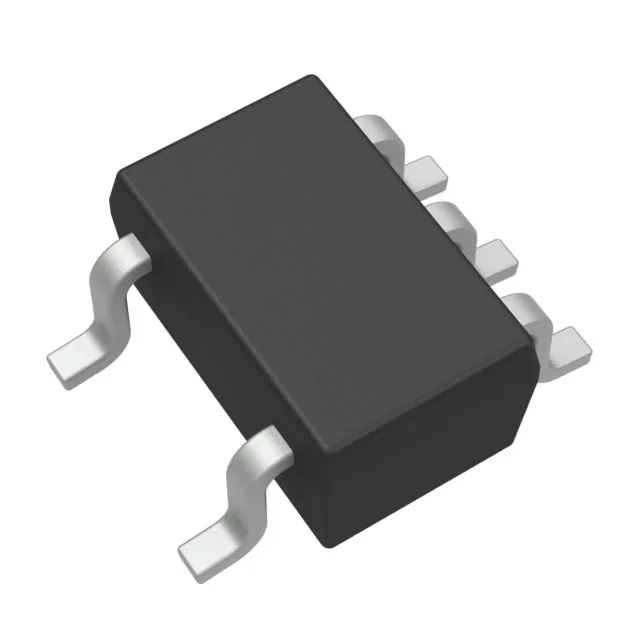
Texas Instruments LPV321M7/NOPB — Analog & Data Acquisition

TI LPV321M7/NOPB op-amp, 152 kHz, rail-to-rail, SC-70-5

MPNLPV321M7/NOPB
End of Life

Texas Instruments LPV321M7/NOPB general-purpose op-amp, single circuit, 152 kHz gain-bandwidth, 0.1 V/µs slew rate, rail-to-rail output, 2.7 V to 5 V supply, SC-70-5 package, -40 to 85°C.

$1.19Ref. price · indicative, final on quote
Packaging5-TSSOP, SC-70-5, SOT-353
RoHSROHS3 Compliant
Independent supplier — new & surplus stockAuthenticity-screened · ESD-safe packingListing updated Aug 2026

Specifications

LPV321M7/NOPB specifications
ParameterValue
Output typeRail-to-Rail
MountingSurface Mount
Amplifier typeGeneral Purpose
Voltage - input offset1.5 mV
Voltage - supply span2.7 V
Current - supply9µA
Current - input bias2 nA
Operating temperature-40°C ~ 85°C
Gain bandwidth product152 kHz
PackageTape & Reel (TR); Cut Tape (CT)
Slew rate0.1V/µs
Case5-TSSOP, SC-70-5, SOT-353
Number of circuits1

Product details

Low-power general-purpose op-amp in SC-70-5

It operates from 2.7 V to 5 V, draws 9 µA quiescent current, and delivers a 152 kHz gain-bandwidth product — enough for sensor signal conditioning, battery monitoring, and low-frequency control loops in portable or always-on equipment.

9 µA supply — sized for battery-powered channels

The 9 µA supply current is the headline spec for this part. In a multi-channel sensor front-end or an IoT edge node, each microamp matters; the part lets you keep the signal chain powered continuously without draining the battery.

152 kHz gain-bandwidth — signal bandwidth ceiling

There is no NRND or last-time-buy notice.

Frequently asked questions

What is the equivalent or closest functional second-source for LPV321M7/NOPB?

The TLV9351IDCKR is a pin-compatible single-channel op-amp from TI with a 3.5 MHz GBP and 20 V/µs slew rate, but it draws 600 µA supply current — a different power/performance tier. For a direct low-power substitute, the LPV321 family has no exact second-source; the TLV9351 is the closest functional alternative if you can trade supply current for bandwidth.