The LP590722QDQNRQ1: Maximum dropout voltage is 0.25 V at the full 250 mA load. PSRR is specified at 90 dB at 100 Hz, rolling off to 60 dB at 100 kHz. That 60 dB at 100 kHz is the figure that matters for rejecting switching-regulator ripple — a buck converter running at 500 kHz will see roughly 30 dB of rejection at that frequency, so post-filtering may be needed for noise-sensitive analog loads. Quiescent current is 25 µA typical, with a maximum supply current of 425 µA. The 25 µA Iq makes this LDO suitable for always-on modules in a vehicle — the regulator's own draw stays below the battery self-discharge rate during key-off periods.
Package and board-fit — 4-X2SON (1x1 mm)
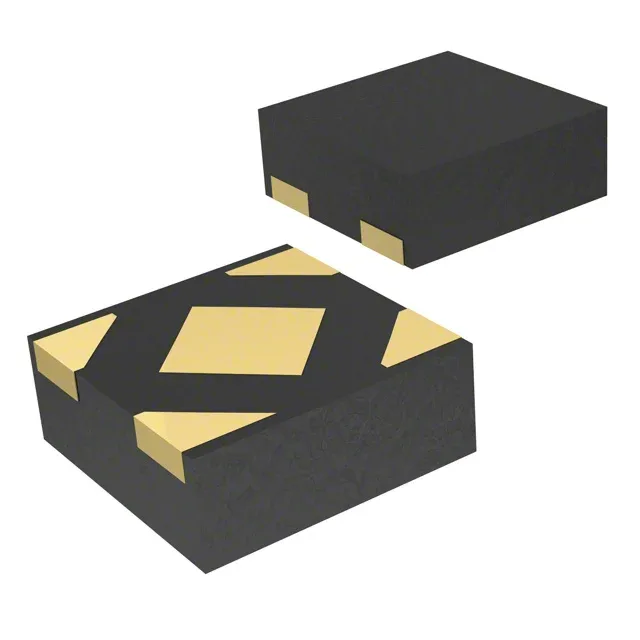
The LP590722QDQNRQ1 comes in a 4-X2SON package measuring 1x1 mm with an exposed pad. Mounting is surface-mount only. The 4-pin X2SON footprint is small enough for dense ECU layouts, but the narrow pitch means the PCB land pattern must follow TI's recommended layout to avoid solder bridging. The enable pin allows the regulator to be switched off by a microcontroller GPIO — useful for sequencing multiple rails or shutting down the LDO in sleep mode to save the 25 µA quiescent draw.
Protection and compliance — built-in safeguards for harsh environments
The LDO includes overcurrent, overtemperature, and short-circuit protection. In an automotive environment where a downstream load can short to ground or the ambient temperature spikes, these protections prevent the regulator from failing catastrophically — it folds back current or shuts down until the fault clears. The part is from the Automotive, AEC-Q100 series. AEC-Q100 certification means the device has passed the full suite of automotive reliability tests — temperature cycling, ESD, latch-up, and extended life testing — so it is qualified for production vehicle programs without additional qualification by the OEM.