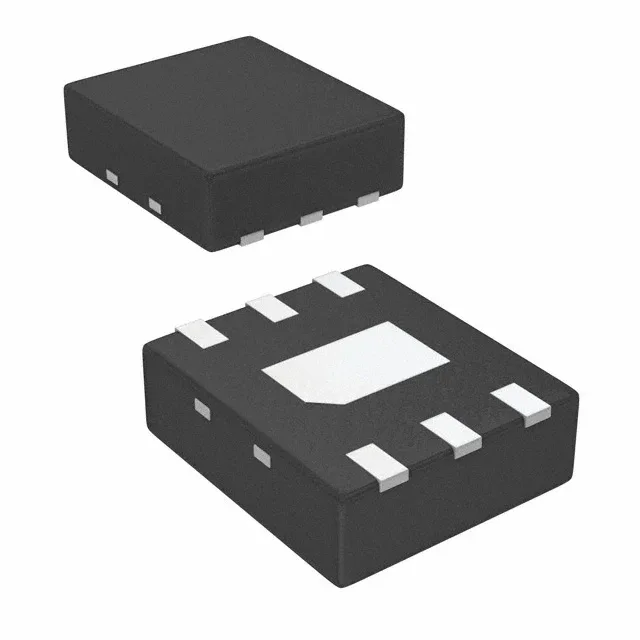
The Texas Instruments LP5900SDX-3.3/NOPB is a single-output, fixed 3.3 V positive LDO rated for 150 mA continuous output. It comes in a 6-WDFN exposed-pad package (6-WSON 2.2x2.5 mm) for surface-mount assembly.
What the PSRR means for noise-sensitive rails
PSRR is listed at 85 dB at 100 Hz, rolling off to 40 dB at 100 kHz. That 85 dB at line frequency means the regulator attenuates 100/120 Hz ripple from a rectified mains supply by a factor of roughly 18,000 — useful for powering analog front-ends or audio codecs where the ripple would otherwise couple into the signal path. The 40 dB at 100 kHz is still 100× attenuation, but above that frequency the LDO's loop gain drops and the output relies on the bypass cap for further filtering.
Quiescent current and battery-operated design
Quiescent current is 50 µA typical, with a maximum supply current of 230 µA. For a battery-powered sensor that spends most of its time in a low-power state, that 50 µA Iq is the floor the regulator draws even when the load is light — it sets the lower bound on standby current. The 0.15 V dropout at 150 mA means the input rail can sag to 3.45 V before the output falls out of regulation, giving margin in a 3.7 V Li-ion application as the cell discharges.
Package, temperature, and protection
The 6-WSON package with exposed pad (2.2x2.5 mm) requires a thermal land on the PCB to pull heat from the die — the pad is the primary thermal path. On-chip protection includes over-temperature shutdown and short-circuit current limiting, so the regulator survives a sustained output short without damage.