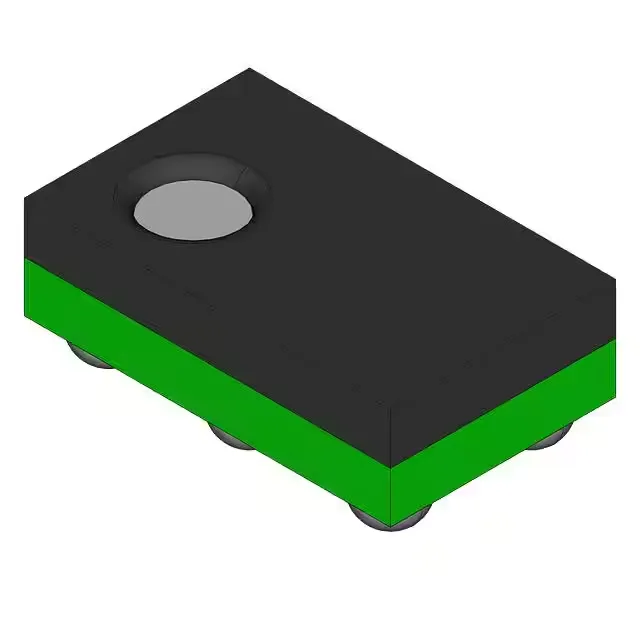
DSBGA footprint and board integration
The LP3999ITL-2.8/NOPB: This is a surface-mount part with no exposed thermal pad; the junction-to-board thermal path runs through the solder bumps, so the board's copper plane under the package directly sets the effective RthJA.
Dropout and PSRR — what the numbers mean for the rail
Maximum dropout is 100 mV at the full 150 mA load — the input rail needs to stay at least that margin above 2.8 V across line and load transients, or the output falls out of regulation. PSRR runs 60 dB at 1 kHz, dropping to 50 dB at 10 kHz — that 10 dB roll-off means upstream switching noise above a few kilohertz passes through more readily, so the LDO is best fed from a clean pre-regulator or followed by a ferrite bead if the load is noise-sensitive.
Quiescent current and enable control
Quiescent current is 150 µA typical, with a maximum supply draw of 200 µA — the 50 µA gap between Iq and supply max covers the enable and internal bias circuitry, so the actual battery drain in a always-on sensor node sits near 150 µA when the output is loaded. The enable pin lets the system shut down the LDO entirely — pulling it low drops the supply current to near zero, which matters for battery-powered designs that sleep between measurement cycles.