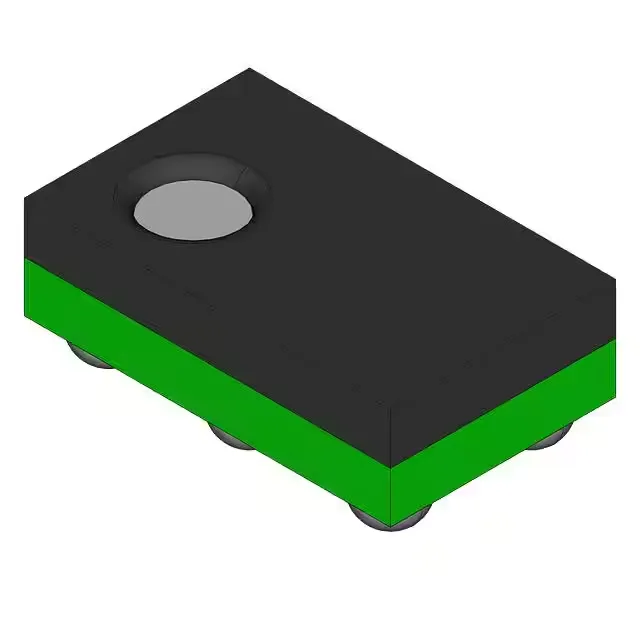
LDO for tight spots — 150 mA, 3.0 V fixed, tiny DSBGA
The LP3987ITLX-3.0/NOPB is a fixed 3.0 V positive-output LDO regulator from Texas Instruments, rated for 150 mA continuous output current. It comes in a 5-bump DSBGA package (1.41 x 1.08 mm) — that footprint is about the size of a grain of rice, so board space is the main design constraint here, not the current. Dropout voltage is just 0.1 V at full load, meaning the input rail can sit as low as 3.1 V and still hold regulation. That low headroom makes it a good fit for battery-powered gear where the supply sags under load. Quiescent current is 120 µA typical, with a max supply current of 200 µA — low enough that the regulator's own draw won't dominate the sleep budget in a sensor node or wearable.
PSRR and protection — what the numbers mean on the bench
Power supply rejection ratio (PSRR) is specified at 50 dB at 10 kHz, dropping to 10 dB at higher frequencies. That 50 dB at 10 kHz means ripple from a switching converter at that frequency gets attenuated by a factor of about 316 — clean enough for an analog front-end or a small ADC reference. Above 10 kHz the rejection falls off, so if your upstream switcher runs at 1 MHz, you'll see more ripple pass through unless you add a post-filter. Protection features include over-current, over-temperature, and short-circuit — all on-chip. No external clamp diode needed for the output; the part handles a hard short to ground without damage as long as the junction temperature stays within the -40°C to 125°C operating range. The enable pin lets you shut down the output and drop the quiescent current to near zero — useful for sequencing rails or power-gating a peripheral that only wakes occasionally.
Package reality — DSBGA rework and layout
The 5-DSBGA package has no leads — it's a wafer-level chip-scale package with solder bumps on the bottom. That means the PCB footprint is the same size as the package itself, so routing the output and input traces under the body is tight. Because it's a BGA, rework on site without a hot-air station is not practical — the bumps reflow under the part, and you can't see the joints. If field-swapability matters, consider a pin-compatible LDO in a larger package like SOT-23. But for a production board that sees a controlled reflow, the DSBGA saves real estate. The supplier device package marking is 5-DSBGA (1.41x1.08) — confirm the bump pitch and ball diameter from the TI datasheet before laying out the solder mask. The package is RoHS3 compliant per the listing.
Sourcing — active, no end-of-life concern
If you need a second source, look for other 150 mA, 3.0 V fixed LDOs in a 5-bump DSBGA, but verify the ball map and enable polarity against the TI datasheet.