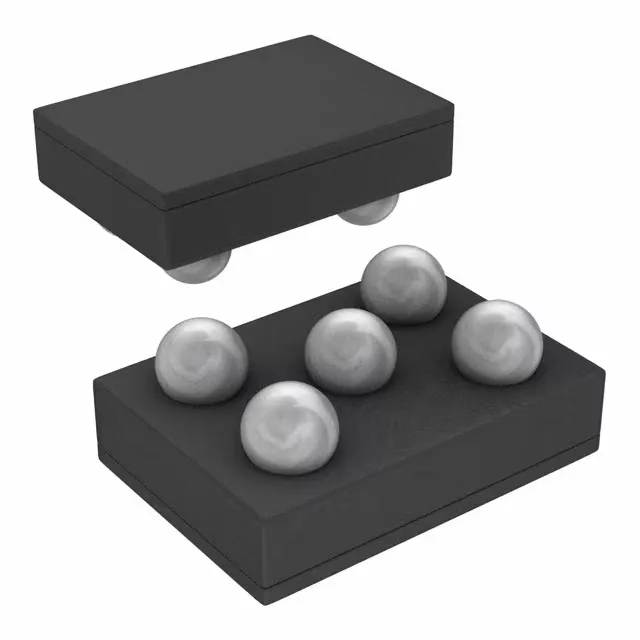
Active production — 3.1 V fixed rail at 150 mA
The LP3985ITL-3.1/NOPB is an active-production Texas Instruments LDO delivering a fixed 3.1 V output at up to 150 mA from a maximum 6 V input rail.
PSRR roll-off and noise rejection
PSRR measures 50 dB at 1 kHz and drops to 40 dB at 10 kHz — the regulator attenuates upstream switching noise by a factor of 100 at 1 kHz and 10 at 10 kHz. For a 100 kHz switching converter feeding this LDO, the attenuation above 10 kHz falls off further; a post-filter LC stage ahead of the input may be needed if the load is a sensitive analog front-end.
150 µA quiescent current — always-on battery load
The 150 µA quiescent current (250 µA max supply) is the current the LDO draws from the input regardless of load — in a battery-powered device that spends most of its time in a low-power state, this Iq sets the floor for the always-on domain's drain. A 100 mAh coin cell with this LDO continuously enabled would see roughly 1500 hours of standby life from the regulator alone, before accounting for the load.
5-DSBGA — board-level handling
The 5-DSBGA (1.41 x 1.08 mm) is a wafer-level chip-scale package with no molded body — the silicon die is the package. The solder balls are the only standoff; board-level coplanarity depends entirely on the PCB pad geometry and the stencil aperture. This package is moisture-sensitive: check the MSL rating on the reel label before reflow. A bake cycle at 125°C for the rated duration is required if the floor life has been exceeded, or the die-attach interface may delaminate during reflow.
The 125°C upper limit is the junction temperature, not the ambient — derate the output current above 85°C ambient per the datasheet's thermal resistance curve for the DSBGA package.
Protection features and enable control
Built-in over-current, over-temperature, and short-circuit protection allow the LDO to survive a sustained output short without damage — the thermal shutdown cycles the output until the fault clears. The Enable pin lets a system controller power down the 3.1 V rail during sleep, dropping the total current draw to near-zero when the load is idle.