It communicates over an I²C interface, making it a good fit for portable devices where the host microcontroller manages the charging profile.
The 950 mA max charge current is programmable via the I²C bus, so you can dial it down for smaller cells or slow charging. That constant-current phase is the bulk of the charge cycle for a single Li-Ion cell at 4.2 V. The fault protection covers over-temperature and reverse current — handy if the battery is connected backwards or the charger sees a thermal event. The 5.5 V max supply voltage is typical for USB-powered or 5 V rail designs.
Package and mounting — field-swap reality
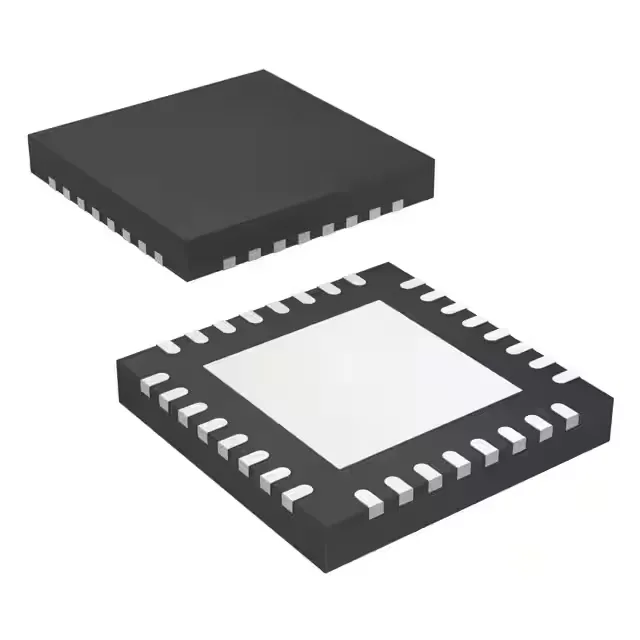
It is a 32-lead WFQFN with an exposed pad, surface-mount only. No lab, no bench — if you are swapping this on site, you need a hot-air station and a steady hand. The Tape & Reel or Cut Tape option covers both production and prototype volumes.