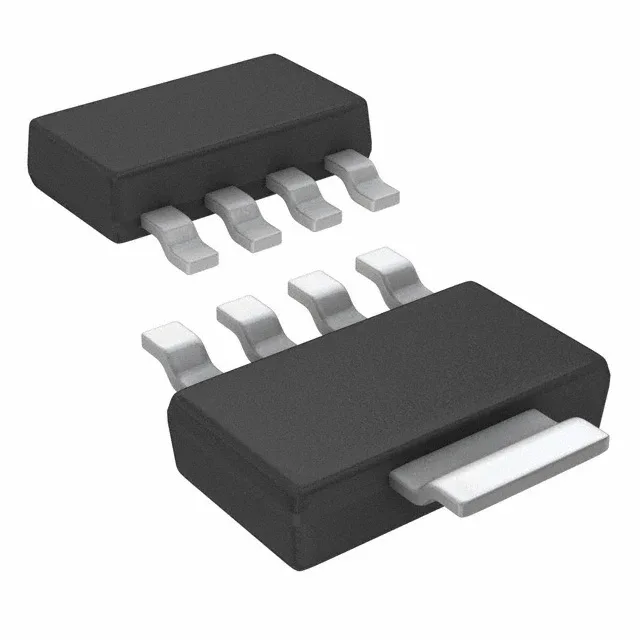
The LP3872EMP-3.3/NOPB comes in a SOT-223-5 package (supplier device package SOT-223-5, also listed as TO-261-5 / TO-261AB). The tab is the output pin and carries the bulk of the thermal dissipation — the PCB copper area under the tab sets the junction-to-ambient thermal resistance. For 1.5 A continuous load, a 1-square-inch copper pour on the top layer is a reasonable starting point; the datasheet's thermal derating curve should be consulted for the actual board stack-up and ambient temperature. The enable pin allows the output to be sequenced on and off, which is useful when the 3.3 V rail must be kept off during a processor reset or when a downstream load needs a controlled power-up. The protection features — over-current, over-temperature, and short-circuit — cover the common fault conditions a board-level power rail sees in the field.
PSRR and ripple rejection
The listed PSRR is 73 dB to 57 dB at 120 Hz — this is the ripple rejection at the fundamental of a full-wave rectified 60 Hz line. For an analog supply powering an ADC reference or a sensitive op-amp front-end, the PSRR at the switching frequency of the upstream converter (typically 100 kHz to 2 MHz) is not specified here, but the 120 Hz figure gives confidence that low-frequency mains ripple is well suppressed.
Lifecycle and compliance
It is RoHS3 compliant, so it meets the EU Restriction of Hazardous Substances directive without any exemption.