1.5 A adjustable LDO — dropout and headroom
The LP3855ES-ADJ/NOPB is a positive adjustable low-dropout linear regulator from Texas Instruments, rated for 1.5 A continuous output with a maximum dropout voltage of 0.435 V at that full load. That dropout figure is the key number for rail design: the input voltage must stay at least 0.435 V above the programmed output across the entire load range, or the output falls out of regulation. With a 1.23 V minimum output and a 6.6 V maximum, it covers common logic and analog rails from 1.8 V up to 5 V.
PSRR across the audio band
Power-supply rejection ratio is listed at 73 dB to 57 dB at 120 Hz — this is the ripple rejection at the fundamental of a full-wave rectifier. The 57 dB floor at 120 Hz means upstream 100/120 Hz ripple from a bulk capacitor is attenuated by roughly 750×, which is enough to keep a 10 mVpp ripple on the input down to about 13 µVpp at the output. For sensitive analog front-ends or audio-stage rails, that buys you clean DC without a post-filter LC stage.
Thermal and package — D²Pak on a power rail
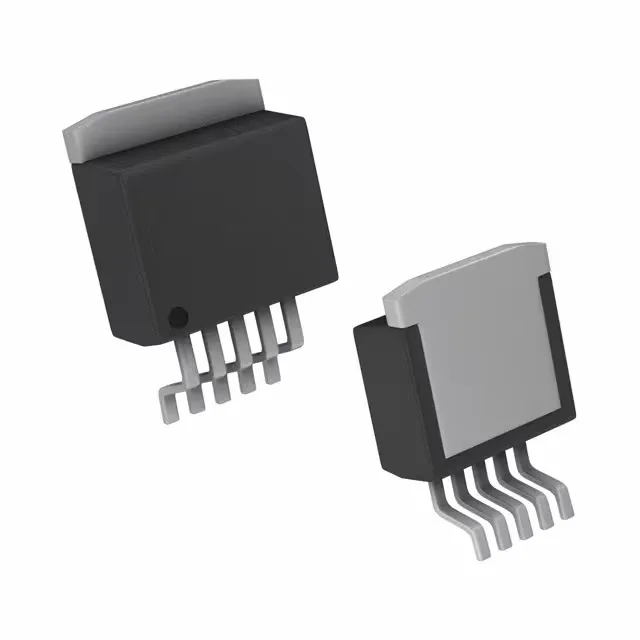
Housed in a DDPAK/TO-263-5 (D²Pak) surface-mount package with the tab as the ground and thermal path. The junction-to-ambient thermal resistance depends on the copper area under the tab — a 1-inch² pad on a 2-oz copper board typically drops RθJA below 40°C/W. With a 1.5 A load and a 1 V input-to-output differential, that is 1.5 W to dissipate; at 25°C ambient the junction stays well under the 125°C rated maximum.
Protection and control features
Built-in overcurrent, overtemperature, and short-circuit protection — the regulator folds back current during a fault and shuts down if the die exceeds the thermal limit. The enable pin lets the system designer gate the output rail from a GPIO or a supervisor IC; with the regulator disabled, quiescent current drops to the 3 mA Iq figure. Maximum supply current is 10 mA, so the control overhead is negligible against the 1.5 A load.