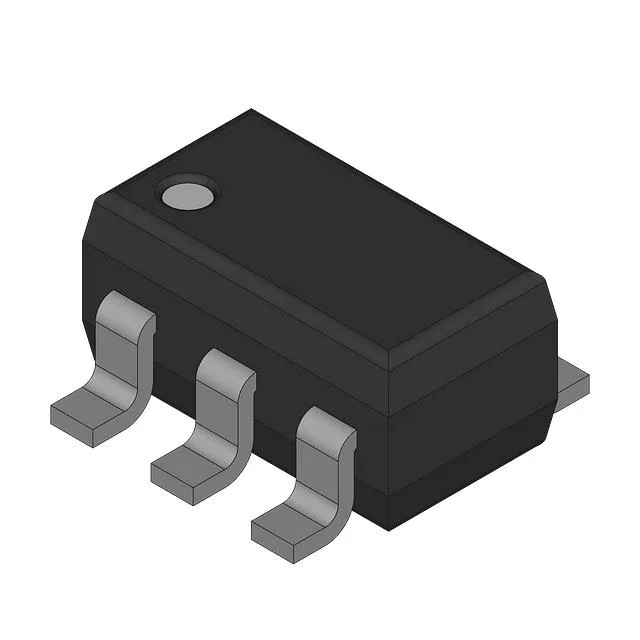
SOT-23-5 LDO for noise-sensitive 1.5 V rails
The Texas Instruments LP2992AIM5X-1.5/NOPB is a single-output, fixed 1.5 V LDO in a SOT-23-5 package, rated for 250 mA continuous output. With 45 dB PSRR at 1 kHz, this part rejects typical switching-regulator ripple by about two orders of magnitude. For a 100 mV p-p upstream ripple, the output sees roughly 0.56 mV p-p — enough for most analog front-ends and sensor bias rails without a post-filter.
Dropout and quiescent — the real BOM numbers
The 95 µA quiescent current (Iq) is the regulator's own draw from the input rail. In a battery-powered sensor that sleeps 99% of the time, that 95 µA is the dominant load when the system is off — a 500 mAh coin cell lasts about 7 months at that rate before the regulator alone drains it. The 4 mA maximum supply current (Iground at full load) is the total current the regulator consumes from the input, including the output load. At 250 mA output, the efficiency is roughly 98.4% — the 4 mA overhead is negligible for most designs. Protection features include over-current, over-temperature, and short-circuit shutdown. No external crowbar or current-limit resistor is needed — the regulator handles fault recovery autonomously.
Active production — no LTB clock ticking
New designs can commit this part without a near-term migration plan. The SOT-23-5 footprint is shared across many TI LDOs in the LP2992 family. If a BOM revision ever needs a different output voltage, the pinout and PCB land pattern stay the same — only the order code changes.