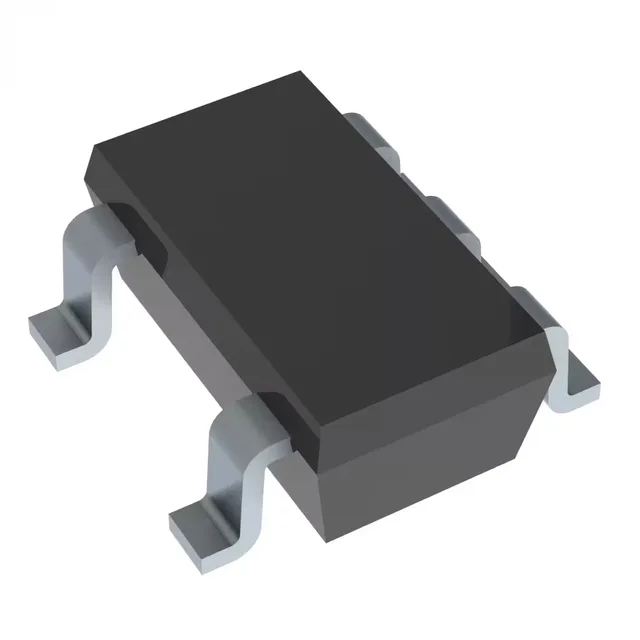
Texas Instruments LP2985-33DBVRM3 — Microcontrollers & Processors (MCU / MPU / DSP)

Texas Instruments LP2985-33DBVRM3 LDO, 150mA, 3.3V Fixed

MPNLP2985-33DBVRM3
End of Life

Texas Instruments LP2985 series LDO voltage regulator, LP2985-33DBVRM3, 150 mA output, 3.3 V fixed, 16 V input max, SOT-23-5 package, Tape & Reel.

$0.55Ref. price · indicative, final on quote
PackagingSC-74A, SOT-753
RoHSROHS3 Compliant
Independent supplier — new & surplus stockAuthenticity-screened · ESD-safe packingListing updated Aug 2026

Specifications

LP2985-33DBVRM3 specifications
ParameterValue
Output typeFixed
MountingSurface Mount
Voltage - input16V
Voltage dropout0.575V @ 150mA
Voltage - output (Min (Fixed))3.3V
Output current150mA
Current - supply2 mA
Current - quiescent95 µA
Operating temperature-40°C ~ 125°C (TJ)
PSRR78dB ~ 45dB (1kHz)
PackageTape & Reel (TR); Cut Tape (CT)
CaseSC-74A, SOT-753
Control featuresCurrent Limit, Enable
Protection featuresOver Current, Over Temperature, Under Voltage Lockout (UVLO)
Number of regulators1
Output configurationPositive

Product details

3.3 V rail for noise-sensitive loads — PSRR and dropout headroom

The LP2985-33DBVRM3 is a fixed 3.3 V output LDO delivering 150 mA with a maximum dropout of 0.575 V at full load — the input rail must stay above 3.875 V to maintain regulation, which a standard 5 V supply clears with 1.125 V of headroom. PSRR spans 78 dB at 1 kHz down to 45 dB at the same frequency — this is the rejection profile for switching-regulator ripple in the 1 kHz band, typical of a poorly filtered boost converter feeding the analog rail. Quiescent current is 95 µA, so the regulator's own draw stays under 0.1 mA in light-load or shutdown scenarios — relevant for battery-backed RTC or sensor nodes that spend most of their time in idle.

16 V input range and protection set — wide-VIN coverage without external clamps

Input voltage maxes at 16 V, so the part can be fed from a 12 V industrial bus, a 9 V battery, or a 5 V logic rail without a pre-regulator — the internal pass FET's breakdown margin covers the full range. On-chip protection includes over-current limiting, thermal shutdown, and under-voltage lockout (UVLO) — the UVLO threshold prevents the output from sourcing current into a rail that hasn't fully come up, which avoids latch-up on the downstream load.

SOT-23-5 footprint and supply format

The LP2985-33DBVRM3 comes in an SOT-23-5 (SC-74A) package — the pinout is standard for this class: input, ground, enable, output, and a no-connect or bypass pin depending on the variant. The 0.95 mm pitch and 2.9 x 1.6 mm body fit a 2-layer board with a ground pour under the package. Available in Tape & Reel (TR) or Cut Tape (CT) — the TR format is the standard reel for automated pick-and-place; CT is for prototype or low-volume builds where the reel fee isn't justified.

Active lifecycle and sourcing posture

RoHS3 compliant per the manufacturer's declaration — no exemptions for lead in solder or other restricted substances under the current EU directive.

Frequently asked questions

What is the PSRR of the LP2985-33DBVRM3 and why does it matter?

PSRR is 78 dB to 45 dB at 1 kHz — the 78 dB figure is the rejection at the low end of the switching-regulator ripple band; the 45 dB figure is the worst-case within that band. For a 100 mVpp ripple on the input, the output sees roughly 0.56 mVpp at 1 kHz, which is clean enough for a 10-bit ADC reference rail but marginal for a 16-bit sigma-delta converter without additional post-filtering.

Can the LP2985-33DBVRM3 replace a TLV74333PDQNR without a board spin?

No — the TLV74333PDQNR is a 300 mA LDO in a different package (X2SON-4 vs SOT-23-5). The pinout and footprint are incompatible; a board layout change is required. The LP2985-33DBVRM3 offers higher PSRR (78 dB vs 68 dB at 1 kHz) but lower output current (150 mA vs 300 mA), so the replacement also depends on the load budget.

What compliance documentation does Texas Instruments provide for the LP2985-33DBVRM3?

The part is RoHS3 compliant per the manufacturer's declaration. Standard TI documentation includes the datasheet, application notes, and a PCN notification service for any future changes.