Why the dropout headroom matters for your rail
The LP2950-30LPRE3 is a 3V fixed-output LDO from Texas Instruments' LP2950 series, delivering up to 100 mA with a maximum dropout voltage of 0.6V at that current. That 0.6V ceiling means the input must stay above 3.6V to maintain regulation — a margin that shrinks if the input is a battery nearing end-of-life or a loosely regulated bus. The quiescent current is 120 µA typical, which keeps the self-consumption low enough for always-on peripherals in battery-powered gear. The protection set — over-current, over-temperature, and short-circuit — covers the common fault modes without needing external clamp diodes.
Temperature range and package constraints
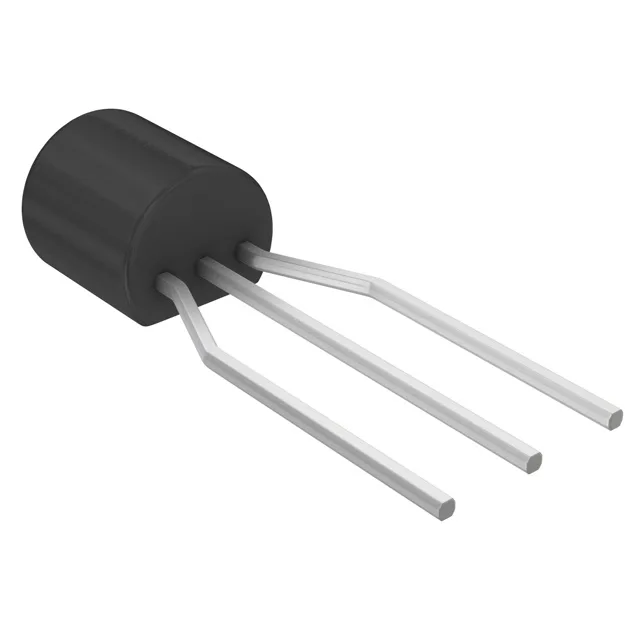
The TO-92-3 formed-leads package is a through-hole footprint — the thermal path goes through the leads into the PCB copper, so the board layout determines the effective current derating. The 30V maximum input voltage gives plenty of headroom for 12V or 24V rails, but the dropout spec is only meaningful when the input-to-output differential is tight — typical for post-regulating a switching pre-regulator.
Texas Instruments continues to manufacture the LP2950 base series, so the risk of a sudden end-of-life is low for a BOM that already qualifies this part.