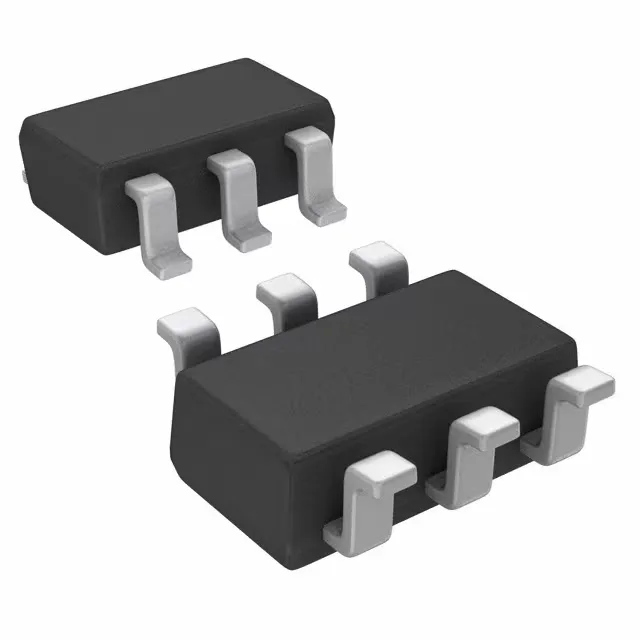
Texas Instruments LMV951MK/NOPB — Logic ICs

LMV951MK/NOPB General Purpose Op-Amp, 2.8 MHz, Rail-to-Rail

MPNLMV951MK/NOPB
End of Life

Texas Instruments LMV951MK/NOPB, General Purpose Amplifier, 1 Circuit, Rail-to-Rail, 2.8 MHz, 1.4 V/µs, 0.9 V to 3 V, 570 µA, SOT-23-6 Thin / TSOT-23-6, -40°C to 125°C.

$2.06Ref. price · indicative, final on quote
PackagingSOT-23-6 Thin, TSOT-23-6
RoHSROHS3 Compliant
Independent supplier — new & surplus stockAuthenticity-screened · ESD-safe packingListing updated Aug 2026

Specifications

LMV951MK/NOPB specifications
ParameterValue
Output typeRail-to-Rail
MountingSurface Mount
Amplifier typeGeneral Purpose
Voltage - input offset1.5 mV
Voltage - supply span0.9 V
Current - supply570µA
Current - input bias36 nA
Current - output (Channel)85 mA
Operating temperature-40°C ~ 125°C
Gain bandwidth product2.8 MHz
PackageTape & Reel (TR); Cut Tape (CT)
Slew rate1.4V/µs
CaseSOT-23-6 Thin, TSOT-23-6
Number of circuits1

Product details

Single-supply rail-to-rail op-amp for 0.9 V to 3 V rails

Its key differentiator is the supply range spanning 0.9 V to 3 V, which allows direct operation from a single alkaline or NiMH cell without a boost converter. The quiescent supply current is 570 µA, making it suitable for always-on sense circuits where every microamp counts.

Temperature range and output drive

The output can source or sink 85 mA per channel, which is unusually muscular for a micropower rail-to-rail amplifier — enough to drive the input of an ADC directly or to switch a small relay through a series resistor.

Package and lifecycle

Frequently asked questions

What are the alternatives to LMV951MK/NOPB?

A higher-speed alternative is the TLV9351IDCKR (3.5 MHz GBW, 20 V/µs slew rate, 4.5 V minimum supply), but it requires a higher rail voltage and draws 600 µA supply current. For a multi-channel option, the OPA4374AIPWT offers four CMOS rail-to-rail amplifiers at 6.5 MHz GBW with a 2.7 V minimum supply. Neither is a pin-compatible drop-in; the choice depends on supply voltage headroom and channel count.