AEC-Q100 dual op-amp for automotive sensor conditioning
The LMV932MM-TI: Each channel draws 116 µA typical supply current while delivering a 1.5 MHz gain-bandwidth product and a 0.42 V/µs slew rate — a combination that suits low-speed sensor amplification, signal filtering, and level shifting in battery-powered or thermally constrained modules.
At 3.3 V the input common-mode range extends to within about 1 V of the positive rail, so high-side sensing at that voltage requires attention to the input limits — the output rail-to-rail capability helps, but the input is not rail-to-rail. The 14 nA typical input bias current is low enough for most resistive sensor bridges without a buffer stage.
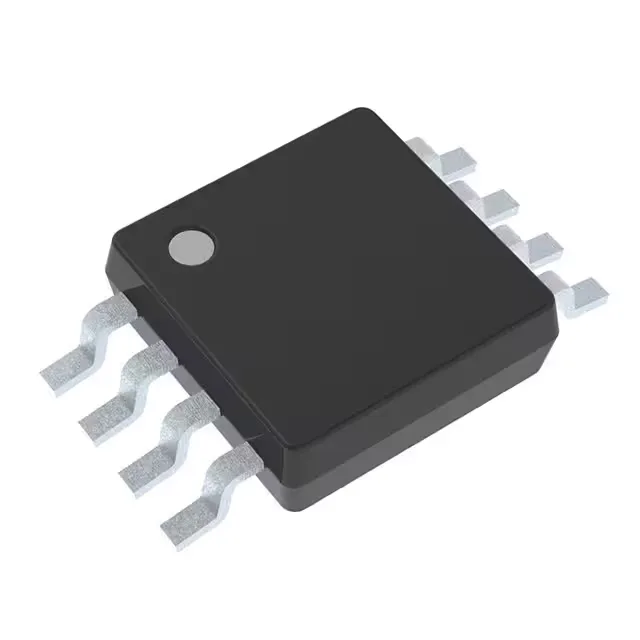
Package and footprint: 8-VSSOP
The supplier device package is 8-VSSOP, which is the standard footprint for this class of small-signal op-amp. No exposed pad — thermal management relies on the package's own dissipation; at 116 µA per channel the self-heating is negligible.
Note that the RoHS compliance is listed as non-compliant, so designs requiring Pb-free assembly should verify the exemption or consider the RoHS-compliant variant. The AEC-Q100 qualification is documented at the series level, supporting automotive PPAP submissions.