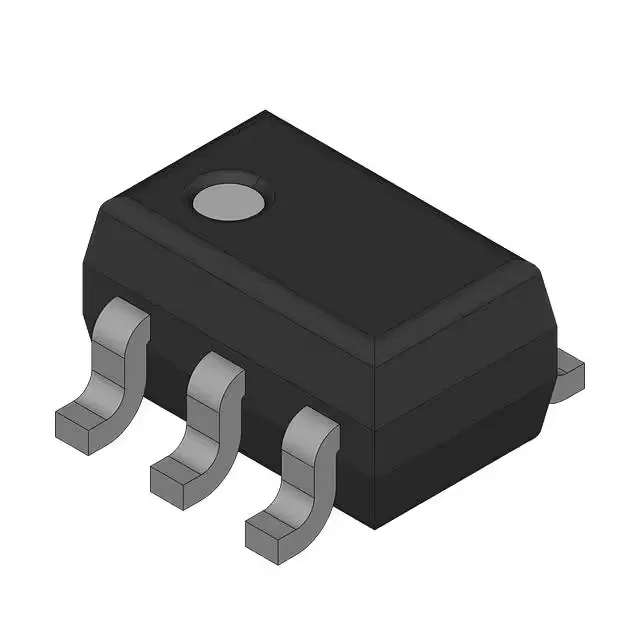
Texas Instruments LMV721M7 — Analog & Data Acquisition

LMV721M7 General Purpose Op-Amp, 10 MHz, Rail-to-Rail

MPNLMV721M7
End of Life

Texas Instruments LMV721M7, Automotive AEC-Q100 LMV® series, general-purpose op-amp, 1 circuit, 10 MHz gain bandwidth, 5.25 V/µs slew rate, rail-to-rail output, 2.2 V to 5.5 V supply, SC-70-5 package.

$1.17Ref. price · indicative, final on quote
Packaging5-TSSOP, SC-70-5, SOT-353
RoHSRoHS non-compliant
SeriesAutomotive, AEC-Q100, LMV®
Independent supplier — new & surplus stockAuthenticity-screened · ESD-safe packingListing updated Aug 2026

Specifications

LMV721M7 specifications
ParameterValue
SeriesAutomotive, AEC-Q100, LMV®
Output typeRail-to-Rail
MountingSurface Mount
Amplifier typeGeneral Purpose
Voltage - input offset80 µV
Voltage - supply span5.5 V
Current - supply1.03mA
Current - input bias260 nA
Current - output (Channel)52.6 mA
Operating temperature-40°C ~ 85°C (TJ)
Gain bandwidth product10 MHz
PackageBulk
Slew rate5.25V/µs
Case5-TSSOP, SC-70-5, SOT-353
Number of circuits1

Product details

What this op-amp delivers

It offers a 10 MHz gain bandwidth product and a 5.25 V/µs slew rate.

Where it fits on the board

Packaged in a 5-lead SC-70-5 (SOT-353), this part takes up minimal PCB real estate. Surface-mount only; no through-hole option. The single-circuit layout means one op-amp per package. Input bias current is 260 nA typical, and the input offset voltage is 80 µV. Output can source or sink 52.6 mA.

Frequently asked questions

What is the gain bandwidth product of LMV721M7?

10 MHz. That is the gain-bandwidth product at unity gain. For a closed-loop gain of 10, expect a usable bandwidth of roughly 1 MHz.

Is LMV721M7 suitable for automotive applications?

Yes. It is part of the Automotive, AEC-Q100 series and rated for -40°C to 85°C junction temperature, so it meets the qualification requirements for most automotive ECUs and body electronics.

Does LMV721M7 support rail-to-rail output?

Yes, the output type is rail-to-rail. That means the output can swing within millivolts of both supply rails, maximizing dynamic range in low-voltage single-supply designs.