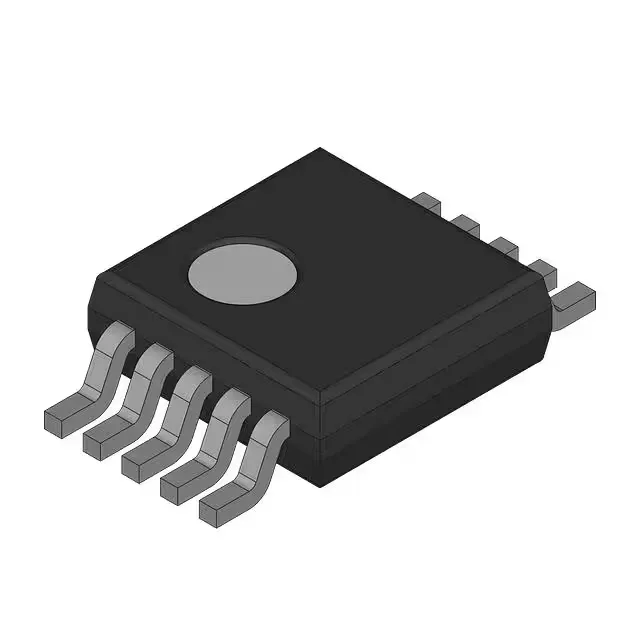
Texas Instruments LMV712MMX — Analog & Data Acquisition

LMV712MMX AEC-Q100 Dual Op-Amp, 5 MHz GBW

MPNLMV712MMX
End of Life

Texas Instruments LMV712MMX, Automotive AEC-Q100 LMV® series, dual general-purpose op-amp, 5 MHz gain bandwidth, 5 V/µs slew rate, rail-to-rail output, 2.7 V to 5.5 V supply, 10-VSSOP package, -40°C to 85°C.

$0.68Ref. price · indicative, final on quote
Packaging10-TFSOP, 10-MSOP (0.118", 3.00mm Width)
RoHSRoHS non-compliant
SeriesAutomotive, AEC-Q100, LMV®
Independent supplier — new & surplus stockAuthenticity-screened · ESD-safe packingListing updated Aug 2026

Specifications

LMV712MMX specifications
ParameterValue
SeriesAutomotive, AEC-Q100, LMV®
Output typeRail-to-Rail
MountingSurface Mount
Amplifier typeGeneral Purpose
Voltage - input offset400 µV
Voltage - supply span5.5 V
Current - supply1.22mA (x2 Channels)
Current - input bias5.5 pA
Current - output (Channel)50 mA
Operating temperature-40°C ~ 85°C
Gain bandwidth product5 MHz
PackageBulk
Slew rate5V/µs
Case10-TFSOP, 10-MSOP (0.118\", 3.00mm Width)
Number of circuits2

Product details

The LMV712MMX: The 5 MHz gain bandwidth product and 5 V/µs slew rate support filtering and amplification in automotive sensor interfaces. Input offset voltage is rated at 400 µV maximum. Input bias current is 5.5 pA typical.

The supplier device package is 10-VSSOP.

Frequently asked questions

Is the LMV712MMX suitable for automotive applications?

Yes, it is part of the Automotive, AEC-Q100 LMV® series, qualified for automotive-grade use.

Can I use the LMV712MMX in a 5 V single-supply circuit?

The rail-to-rail output stage maintains swing close to the rails, preserving dynamic range in a 5 V system.

What are the LMV712MMX equivalent or replacement parts?

A close functional peer is the TLV9362IDDFR, a dual general-purpose op-amp with 10.6 MHz GBW and 25 V/µs slew rate, also AEC-Q100 qualified. The TLV9362 offers higher bandwidth and slew rate but differs in supply voltage range and package — verify pin compatibility and performance margins before substituting.