1 MHz gain-bandwidth at 70 µA — the power-conscious signal chain choice
The 1.7 V/µs slew rate is enough for audio-band filtering, sensor buffering, and low-speed ADC drive — but if you are pushing 10 kHz square waves at full output swing, the slew-rate limit will round the edges. This is the part you pick when the BOM has a tight power budget and the signal bandwidth stays under 100 kHz.
Package and footprint — 8-VSSOP with Tape & Reel option
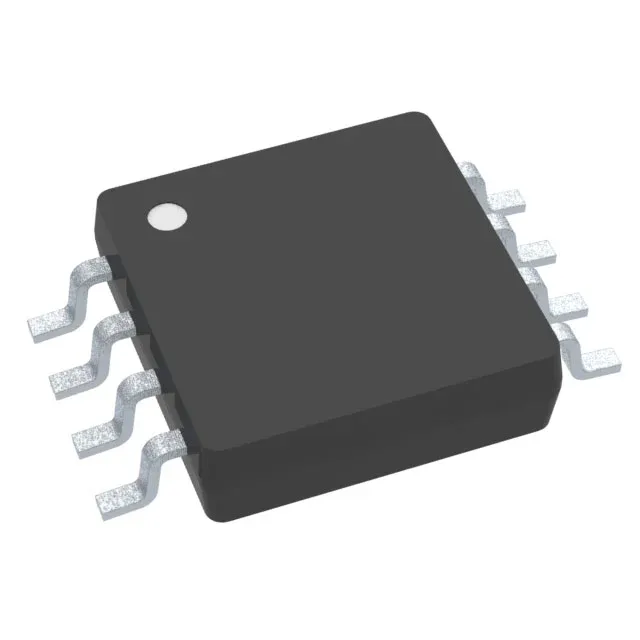
The LMV358AIDGKT ships in an 8-VSSOP package (the supplier device package), which is the same 3.00 mm body width as the 8-TSSOP and 8-MSOP options listed.
The extended temperature range means the input offset voltage (1 mV max) and input bias current (10 pA typical) stay within spec across the full span, not just at 25°C. If your design lives in a heated office, a commercial-grade part would work, but the LMV358AIDGKT is the safer choice when the ambient can swing.
ROHS3 compliance is confirmed, which simplifies EU and global BOM compliance. For a procurement desk, this means no last-time-buy pressure and no forced redesign for obsolescence.
Output drive and rail-to-rail capability
The rail-to-rail output is the key feature here: at 2.5 V supply, the output can swing within a few tens of millivolts of the rails, preserving dynamic range in low-voltage sensor chains. But note the input common-mode range is not rail-to-rail — the datasheet (not reproduced here) typically specifies it as VSS to VDD - 1 V for this family, so high-side current sensing at 2.5 V single supply would hit the input limit.