600 ns propagation delay — what it means for the threshold crossing
The LMV331M7X: Its 600 ns max propagation delay sets the speed floor: after the input crosses the reference threshold, the output takes up to 600 ns to swing — fast enough for 100 kHz+ switching but not for high-speed ADC front-ends or GHz-level zero-crossing detectors.
Output flexibility and drive capability
The output stage supports CMOS, open-collector, and TTL logic levels — the open-collector configuration lets you pull up to a different rail than the comparator supply, handy for interfacing a 3.3 V sensor threshold to a 5 V logic input. Typical output current is 84 mA at 5 V, enough to sink a relay coil or drive an LED indicator without a buffer transistor.
Input offset and bias — the real-world threshold accuracy
Maximum input offset voltage is 7 mV at 5 V — for a 2.5 V reference, the actual trip point can be anywhere from 2.493 V to 2.507 V. That is fine for over-temperature alarms or undervoltage lockouts, but a precision window comparator needs a lower-offset part like the LMP series. Input bias current maxes at 0.25 µA, so a 10 kΩ source impedance adds only 2.5 mV of additional error — negligible in most threshold circuits.
Package and board-fit for tight layouts
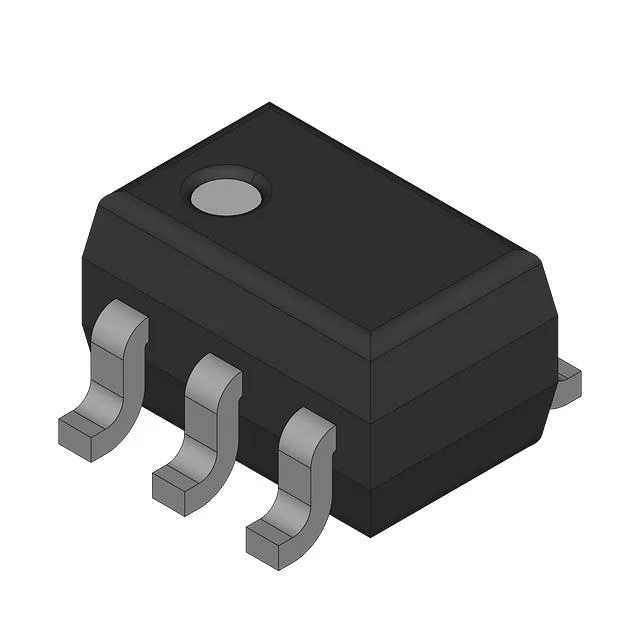
The supplier device package is SC-70-5, a standard surface-mount footprint with 0.65 mm pitch. No exposed thermal pad; power dissipation is limited to the ambient environment through the leads and trace copper.
Temperature grade and operating range
Not rated for under-hood 125°C; that requires an AEC-Q100-qualified part like the LMV331-Q1 series.