What the 45 MHz bandwidth and 35 V/µs slew rate buy you
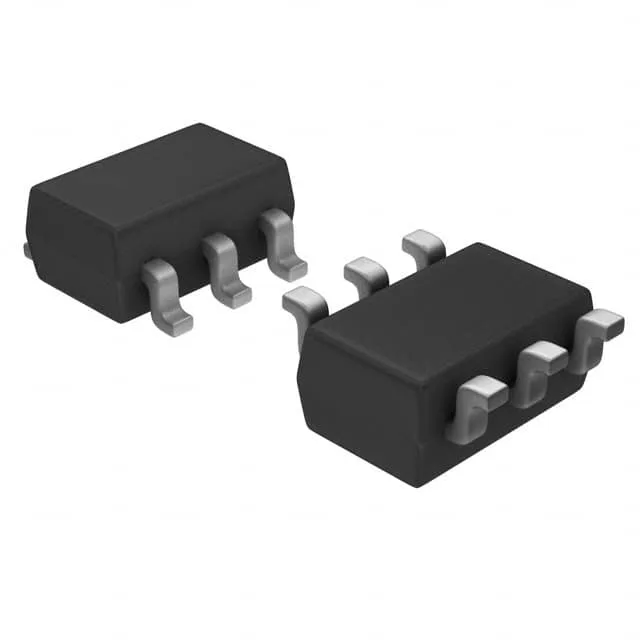
The LMV118MF/NOPB: That combination makes it a strong fit for applications like video buffering, ADC driver stages, or high-speed signal conditioning where you need to preserve signal integrity without burning through the power budget. Packaged in a SOT-23-6, it fits tight board layouts typical of portable or channel-dense designs.
Supply current vs. speed — the trade-off that defines the part
At 600 µA quiescent, the LMV118MF/NOPB sits in a power-conscious tier of high-speed amplifiers. The 35 V/µs slew rate means it can handle fast edges — think pulse amplification or reconstructing waveforms from a DAC — without the slew-induced distortion that slower parts introduce. If you need lower offset or picoamp bias, you'd look at a CMOS-input alternative like the TLV9351IDCKR, but that part trades bandwidth for the bias advantage.
The SOT-23-6 package is surface-mount only, reflow-solderable, and MSL 1 per TI's standard for this package family, so no special bake handling beyond normal floor-life limits.
If you are dual-sourcing or looking for a pin-compatible second source, the TLV9351IDCKR offers a general-purpose CMOS alternative in the same SOT-23-6 footprint, though with a 3.5 MHz bandwidth and 20 V/µs slew rate — a meaningful speed trade-off.