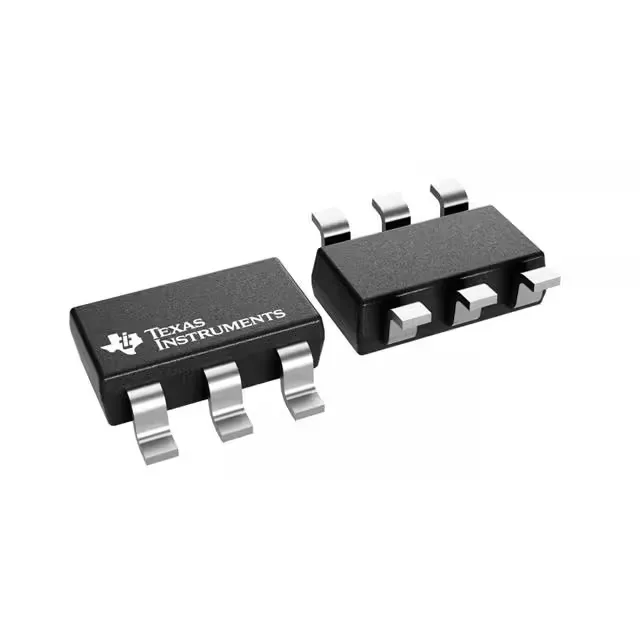
The LMR16006YQ3DDCTQ1 is a 600 mA step-down (buck) regulator from TI's SIMPLE SWITCHER® family, qualified to AEC-Q100 Grade 1 for automotive applications. Its 4 V to 40 V input range covers the full 12 V and 24 V vehicle electrical system envelope, including cold-crank dips and load-dump transients, without requiring an external clamp. The fixed 3.3 V output is a common rail for MCUs, CAN transceivers, and sensor bias supplies in engine control units (ECUs), body controllers, and infotainment domains. The 2.1 MHz switching frequency keeps the inductor and output capacitor small enough for the TSOT-23-6 footprint, though the lack of synchronous rectification means the Schottky catch diode's forward drop adds to the loss budget at higher duty cycles.
Wide input range and thermal envelope for under-hood duty
The 4 V minimum input lets the regulator ride through a 12 V battery dipped to 4.5 V during cold-crank, while the 40 V maximum covers a 24 V truck's load-dump surge. The -40°C to +125°C junction temperature range matches the under-hood ambient of an engine bay ECU — a 105°C summer underhood leaves 20°C of margin before the thermal shutdown threshold. At 600 mA output and 2.1 MHz switching, the internal power FET's conduction and switching losses heat the die. The TSOT-23-6 package's thermal resistance (junction-to-ambient) is around 170°C/W on a standard 2-layer board — at full load with 12 V in and 3.3 V out, the power dissipation is about 0.5 W, pushing the die 85°C above ambient. That leaves only 40°C headroom at 125°C ambient, so a 4-layer board with thermal vias under the exposed pad is the practical layout for sustained full-load operation in a hot environment.