Buck regulator fit for 40 V rails
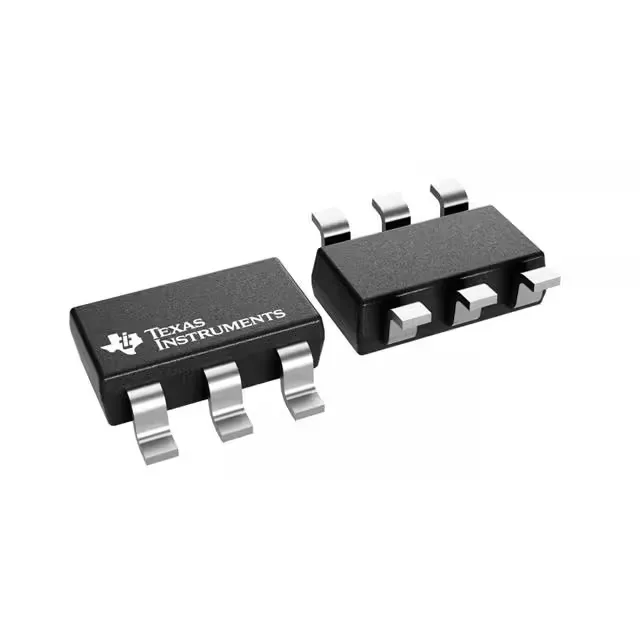
The LMR14006XDDCR is a 600 mA step-down converter from the SIMPLE SWITCHER® family, built around a non-synchronous buck topology. It takes a 4 V to 40 V input and delivers an adjustable output from 0.765 V up to 38.4 V — so it handles 12 V, 24 V, and 48 V industrial rails with headroom to spare, as long as the input stays below the 40 V abs-max ceiling. The trade-off is that it is non-synchronous — the external Schottky catch diode adds a forward-voltage drop that cuts efficiency at low output voltages, but it also means no shoot-through risk and a simpler bill of materials for a 600 mA rail. The TSOT-23-6 (SOT-23 Thin) package sits low on the board and dissipates heat through the copper pour on the PCB — the thermal resistance is pad-area dependent, so a solid ground plane underneath is non-negotiable for full 600 mA output at high ambient.
Active status and compliance baseline
The package is supplied in Tape & Reel (TR) or Cut Tape (CT) options, suitable for both volume pick-and-place and prototype runs. Surface-mount assembly with the SOT-23 Thin footprint is straightforward — standard reflow profiles for MSL-1 or MSL-2 parts apply, though the exact moisture sensitivity level is not stated here.
What 600 mA and 40 V mean for your rail
The 600 mA output current is the continuous rating — enough for sensor supplies, small fan drives, or a local 3.3 V rail from a 24 V bus. The 40 V maximum input means it survives 24 V nominal systems with transients up to that level, but a 48 V battery bus or a 60 V industrial rail is out of range without a front-end clamp. The 1.1 MHz switching frequency keeps the ripple within a few tens of millivolts with a 10 µH inductor and 22 µF output cap — typical values for a 600 mA buck.
Sourcing and availability posture
This is an active, current-production Texas Instruments part.