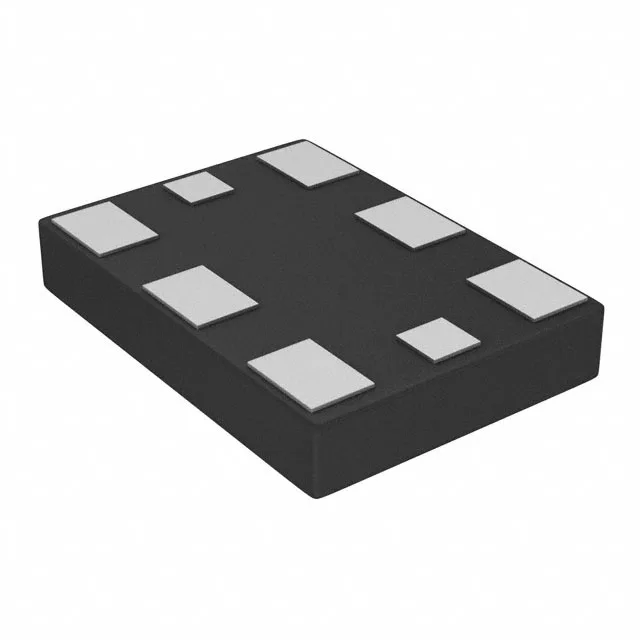
Texas Instruments LMK61PD0A2-SIAT — Crystals & Oscillators

LMK61PD0A2-SIAT XO

MPNLMK61PD0A2-SIAT
Active

Texas Instruments LMK61PD0A2-SIAT, Standard XO, 8-SMD Module, 7 selectable frequencies 62.5–312.5 MHz, HCSL/LVDS/LVPECL output, -40°C~85°C, Active

$13.5000Ref. price · indicative, final on quote
Independent supplier — new & surplus stockAuthenticity-screened · ESD-safe packingListing updated Aug 2026

Specifications

LMK61PD0A2-SIAT specifications
ParameterValue
TypeXO (Standard)
Voltage3.135V ~ 3.465V
Frequency - output 162.5MHz, 100MHz, 106.5MHz, 125MHz, 156.25MHz, 212.5MHz, 312.5MHz
Operating temperature-40°C~85°C
Height0.045\" (1.15mm)
Size (Dimension)0.276\" L x 0.197\" W (7.00mm x 5.00mm)
OutputHCSL, LVDS, LVPECL
PackageTape & Reel (TR); Cut Tape (CT)
Base resonatorCrystal
Case8-SMD Module

Product details

Seven frequencies, three output standards — one footprint

This is a standard crystal-based XO that can be ordered or configured for any of seven output frequencies: 62.5, 100, 106.5, 125, 156.25, 212.5, or 312.5 MHz. The output driver supports HCSL, LVDS, or LVPECL — no external level-shifting resistors needed. That means a single 8-SMD module can serve as the reference for a 1000BASE-T PHY, a PCIe Gen3 clock, or a SerDes frame buffer, depending on the frequency and output type selected at order.

Wide supply and temperature envelope

Supply range is 3.135 V to 3.465 V — compatible with 3.3 V ±5 % rails common in networking and industrial gear.

Package and ordering options

Housed in a 7.00 mm × 5.00 mm, 1.15 mm tall 8-SMD module. The base product number is LMK61PD0A2; the -SIAT suffix denotes the specific frequency/output configuration and packaging variant.

Frequently asked questions

Is the LMK61PD0A2-SIAT pin-compatible with the base LMK61PD0A2?

The -SIAT suffix indicates a specific factory-programmed frequency and output format. The base product number LMK61PD0A2 shares the same 8-SMD footprint and pinout — confirm the output type and frequency match your BOM requirement before substituting.