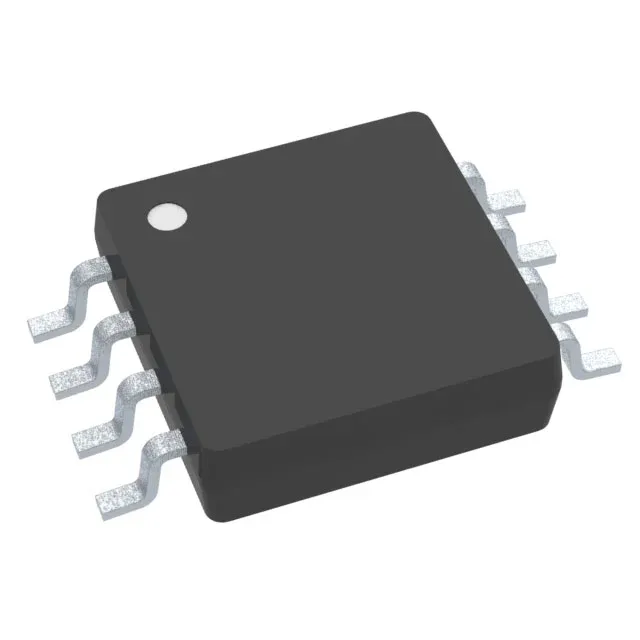
Texas Instruments LMH6658MM/NOPB — Logic ICs

LMH6658MM/NOPB Texas Instruments Dual Voltage Feedback

MPNLMH6658MM/NOPB
End of Life

Texas Instruments LMH® series, LMH6658MM/NOPB, dual voltage feedback op-amp, 700 V/µs slew rate, 270 MHz -3 dB bandwidth, 140 MHz GBP, rail-to-rail output, 8-VSSOP package, -40°C to 85°C.

$2.25Ref. price · indicative, final on quote
Packaging8-TSSOP, 8-MSOP (0.118", 3.00mm Width)
StockContact for availability
MOQ1 pcs
  • 100% new & originalTraceable channels only — no refurbs, no pulls, no remarked parts.
  • Date & lot codes on quoteStated per line before you commit; label photos on request.
  • MSL-compliant ESD packingMoisture-sealed bags with indicator cards; reels photo-verified.
  • PayPal buyer protectionPay by T/T, PayPal or Payoneer — card payments covered end to end.

Specifications

LMH6658MM/NOPB Technical Specifications
ParameterValue
SeriesLMH®
Output typeRail-to-Rail
Mounting typeSurface Mount
Amplifier typeVoltage Feedback
Voltage - input offset1 mV
Voltage - supply span12 V
Current - supply6.5mA (x2 Channels)
Current - input bias5 µA
Current - output (Channel)110 mA
Operating temperature-40°C ~ 85°C
-3db bandwidth270 MHz
Gain bandwidth product140 MHz
PackageTape & Reel (TR); Cut Tape (CT)
Slew rate700V/µs
Case8-TSSOP, 8-MSOP (0.118\", 3.00mm Width)
Number of circuits2

Product details

The LMH6658MM/NOPB is a dual voltage-feedback op-amp from the LMH® series, built for high-speed signal conditioning where large-signal bandwidth matters. Its 700 V/µs slew rate and 270 MHz -3 dB bandwidth let it swing 5 Vpp at frequencies well into the tens of megahertz without slew-induced distortion — a fit for video distribution amplifiers, ADC input buffers, and pulse-processing front ends. The 140 MHz gain-bandwidth product gives the designer flexibility: close the loop for a gain of +10 and still see 14 MHz of usable bandwidth, or run at unity gain and extract the full 270 MHz. Output type is rail-to-rail, which preserves headroom in low-voltage supplies, and each channel can deliver 110 mA — enough to drive a 50-ohm back-terminated line or a small transformer directly.

Dual channel, 6.5 mA per channel — power budget for multi-amp boards

Two amplifiers in one 8-VSSOP package, each drawing 6.5 mA supply current (13 mA total). That quiescent number is the baseline; dynamic current scales with output swing and load. The supply range spans 3 V to 12 V, so it runs on common 5 V or 3.3 V rails with margin. Input bias current is 5 µA — a bipolar input stage, not JFET or CMOS, so expect the offset voltage (1 mV max) and bias current to shift with temperature. Pair with a low-impedance source or add a guard ring around the input pins on the PCB to keep leakage clean.

Industrial temperature range — deployment context

Not AEC-Q100 qualified — the temperature grade and lack of automotive PPAP documentation mean this part is not intended for under-hood or chassis-domain automotive designs. For outdoor telecom cabinets or factory-floor sensor interfaces that stay within the industrial range, the thermal margin is adequate. The package is 8-VSSOP (MSOP-8, 3.00 mm width), a small-outline surface-mount footprint for layout-constrained boards.

Lifecycle and supply posture

No NRND or last-time-buy notice.

Frequently asked questions

Does LMH6658MM/NOPB have rail-to-rail output?

Yes, the output type is rail-to-rail. The input common-mode range is not rail-to-rail — the voltage feedback architecture limits input swing to within roughly 1 V of each rail, so high-side sensing at low supply voltages requires a different topology.

When sourcing LMH6658MM/NOPB, what is the closest functional second-source?

No official second-source cross-reference is listed. The THS4215DRBT from TI is a single-channel voltage-feedback op-amp with a higher slew rate (970 V/µs) but is not a pin-compatible replacement. For a dual-channel alternative, evaluate the TLV9362IDDFR (10.6 MHz, 25 V/µs) if the speed requirement is lower, or the OPA4374AIPWT (4-channel, 6.5 MHz) for multi-amp density. None are direct drop-in substitutes.