CMOS dual op-amp for extreme-temperature, micropower signal chains
The LMC6462AMN: Its 50 kHz gain-bandwidth product and 0.028 V/µs slew rate make it a poor fit for fast switching or high-frequency amplification — this is a part for DC and low-frequency signal conditioning where every microamp of supply current is budgeted. The 50 µA per channel supply current and 0.15 pA input bias current suit battery-powered sensor interfaces, precision integrators, and photodiode amplifiers that must operate from -55°C to 125°C.
The rail-to-rail output stage lets the LMC6462AMN swing close to the supply rails, which is useful in single-supply designs where headroom is tight. The 3 V minimum supply span allows operation from two alkaline cells or a lithium primary cell, while the 15.5 V maximum covers industrial 12 V and 15 V rails.
Military temperature grade and through-hole package
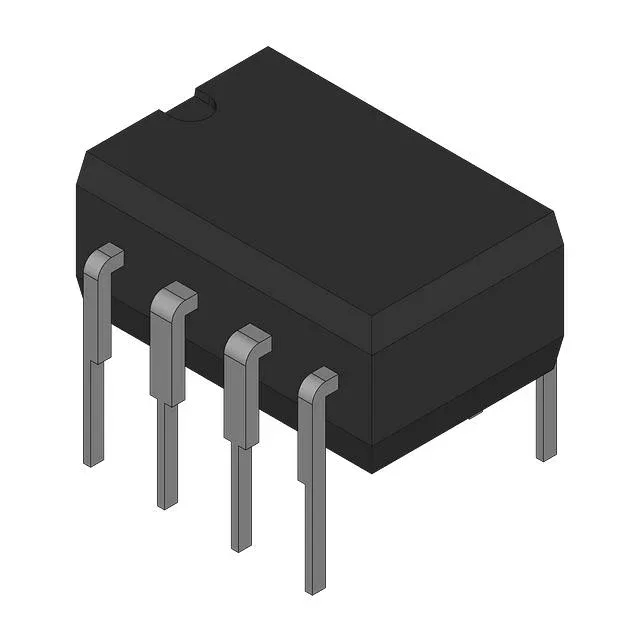
The 8-DIP through-hole package is a legacy footprint — it is larger than an SOIC or TSSOP, but it is easier to hand-solder, socket, or rework, making it a common choice for prototype runs, repair depots, and MRO stockrooms that support older equipment.
Lifecycle and compliance — active but RoHS non-compliant
The RoHS non-compliant flag is the critical sourcing constraint: this part uses lead-bearing solder finish, which exempts it from RoHS restrictions for certain applications (military, aerospace, medical implants) but disqualifies it for designs that must pass RoHS certification. For RoHS-compliant builds, a pin-compatible alternative in a lead-free finish would need to be qualified.
Because the LMC6462AMN is active but RoHS non-compliant, it is not a standard stock item at every distributor. For volume production or blanket-order commitments, a sourcing inquiry should verify date-code freshness and confirm the lead-bearing finish is acceptable for the target assembly process. This part is specified into the BOM and quoted to order — not a bin-stock commodity.