What this CMOS dual op-amp brings to the board
The 4.5 V to 15.5 V supply span covers both single 5 V and split ±5 V or ±12 V rails, so it slots into existing analog front-end designs without a regulator change. The 150 µV input offset keeps DC errors low enough for precision instrumentation without external trimming.
With a 1.5 V/µs slew rate, this amplifier can swing a 5 V peak-to-peak output at roughly 48 kHz before slew-rate limiting distorts the waveform. That covers audio-frequency filtering, motor-current sensing loops, and slow sensor readouts. If your application needs to reproduce fast edges (e.g., pulse-width modulation feedback or high-speed ADC drive), the 1.3 MHz GBW and 1.5 V/µs slew rate together tell you the part is optimized for precision at moderate speeds, not for video or high-frequency switching.
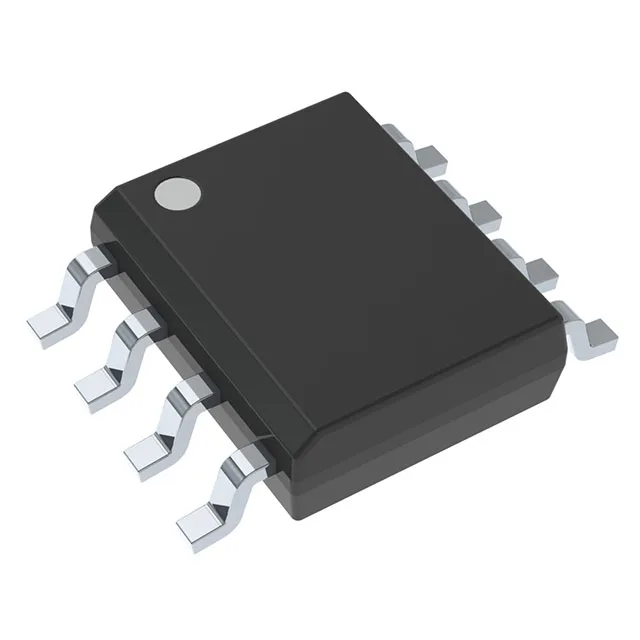
Package and rework — 8-SOIC, pin 1 is marked
The body is small enough that a hot-air station can lift it without preheating the whole board, and the lead pitch (1.27 mm) gives you room to tack a probe wire during debug. No hidden thermal pad, so rework is straightforward: flux, hot air, lift the part, clean the pads, place the new one.