AEC-Q100 quad CMOS op-amp for automotive signal chains
The CMOS input stage delivers 0.02 pA input bias current, preserving accuracy from high-impedance sources like piezoresistive pressure sensors or thermistors without external buffer stages.
The 8 mA output current per channel drives typical ADC inputs, reference buffers, or small relays directly.
Supply range 2 V to 15.5 V — rail flexibility for unregulated buses
The 2 V minimum supply allows operation from a single lithium-ion cell or a 3.3 V regulated rail, while the 15.5 V maximum covers 12 V automotive battery systems including load-dump transients within the device's absolute maximum ratings. The 1.3 mA total supply current for all four amplifiers (325 µA per channel) keeps the power budget tight in multi-channel modules like body controllers or battery management systems.
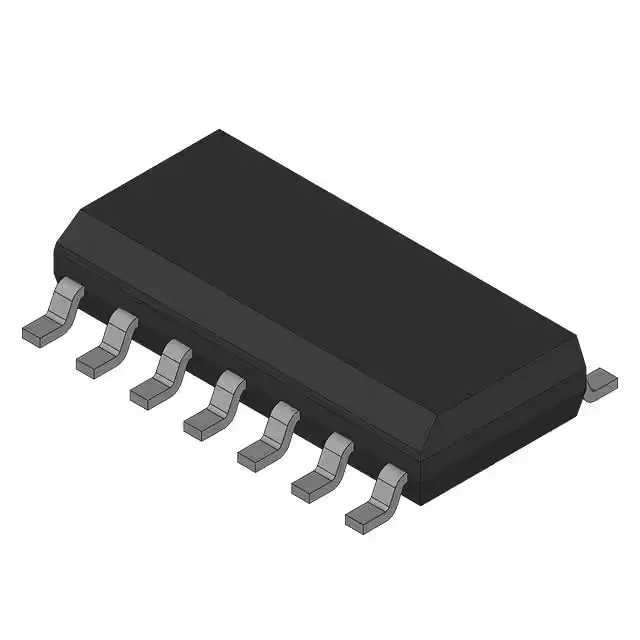
Housed in a 14-SOIC package (0.154" width, 3.90 mm body), the LMC6036IM uses a standard surface-mount footprint compatible with reflow soldering.
For automotive programs requiring PPAP or AEC-Q100 documentation, the series qualification is already in place.