LM7805CT/NOPB

Texas Instruments

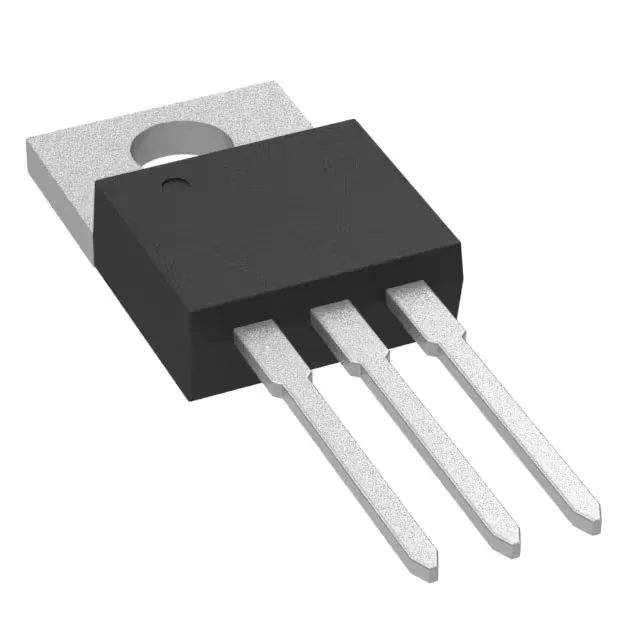
Texas Instruments LM7805CT/NOPB fixed 5V linear regulator, 1.5A output, TO-220-3 through-hole package, 80dB PSRR at 120Hz, over-current and thermal protection.

Texas Instruments LM7805CT/NOPB
Download datasheet (PDF)
[IN STOCK] In Stock: 151 pcs
$4.71/ pc

Volume pricing

Buy Now

MOQ 1 · Tube · RoHS · EIA-481 · DAP/DDP · T/T

Technical specifications

LM7805CT/NOPB specifications
Parameter / AttributeSpecification / Value
Output typeFixed
MountingThrough Hole
Voltage - input35V
Voltage dropout2V @ 1A
Voltage - output (Min (Fixed))5V
Output current1.5A
Current - quiescent6 mA
Operating temperature0°C~125°C
PSRR80dB (120Hz)
PackageTube
CaseTO-220-3
Protection featuresOver Current, Over Temperature, Short Circuit
Number of regulators1
Output configurationPositive
100% Footprint Match · Solder-Ready (No PCB Redesign Needed)

Need Stock or a Drop-in Second-Source for LM7805CT/NOPB?

Package: TO-220 / TO-92 (78L) / DPAK · Pin-compatible replacements with immediate Shenzhen spot stock

Footprint Match 98%
Supply Chain & Allocation Reality:

The 7805 is the most-produced linear regulator in history - five volts, three pins, a heatsink tab - and its family is the most casually substituted row of parts on any bench. The middle letter is the current grade and the packages follow it: 78L05 is 100mA in TO-92, 78M05 is 500mA class, the plain 7805 is 1A in TO-220. Downward substitutions work when the load fits; upward ones need the space and the heatsink. Two traps close the story: the 79xx negative series shares the family name and nothing else, and the low-dropout parts (1117 class) have quietly replaced the 7805 in 3.3V designs where the 2V dropout of a 7805 simply cannot regulate.

Verified Pin-Compatible Replacements (3 verified alternatives)

78L05 Multiple fabs TO-92
Functional Equivalent
Availability & Target Pricing:

The 100mA Member - Big Package Not Required

Shenzhen Spot Stock (24-48h Dispatch)

Electrical & Core Specs:

The TO-92 grade of the same regulator: 100mA output against the 1A of the TO-220 part, same 5V fixed output, same 2V-class dropout.

Same input window; dissipation is the tiny body limit - bias and standby rails only.

Compatibility & Drop-In Notes: Substitution direction rule: a higher-rated part can serve a lower-rated position when it physically fits (a 7805 standing in for a 78L05 is fine and current-rich); the reverse fits the socket but starves the load at the worst moment.
Package & Solder Footprint: TO-92 against TO-220: lead order follows the package drawing, not the family habit - verify, because the pinouts do differ between grades.
Shenzhen Warehouse Stock & MOQ: Commodity stock everywhere; the bias-rail part in every drawer.
78M05 Multiple fabs TO-220 / DPAK (medium)
Functional Equivalent
Availability & Target Pricing:

The 500mA Middle Rung

Shenzhen Spot Stock (24-48h Dispatch)

Electrical & Core Specs:

The medium grade: 500mA class output (some vendors rate closer to the full ampere - read the specific datasheet).

Same 5V output and dropout class; dissipation scales with the smaller die.

Compatibility & Drop-In Notes: The current grade is the specification - the family name hides it in one letter. When a regulator runs hot in a design, the first question of this family is which grade the BOM actually specified.
Package & Solder Footprint: DPAK versions put the tab on the output node in some makers - the mechanical drawing decides.
Shenzhen Warehouse Stock & MOQ: Wide stock; grade printed on the body.
L7905 STMicroelectronics / TI TO-220
Functional Equivalent
Availability & Target Pricing:

The Negative Mirror - Different Wiring Entirely

Shenzhen Spot Stock (24-48h Dispatch)

Electrical & Core Specs:

The negative-rail counterpart: -5V at the same 1A class - the 79xx family mirrors the 78xx ratings across the entire row.

Negative supplies only; the pin order is NOT the mirrored connector of the 7805 - the ground pin sits differently and the tab follows the input side.

Compatibility & Drop-In Notes: The classic repair error this entry exists for: a 7805 pressed into a 7905 socket (or the reverse) sometimes looks like it almost works and then shorts the rail. The 78 and the 79 are relatives in name only.
Package & Solder Footprint: TO-220 with the 79xx pin arrangement - read the drawing, never the memory.
Shenzhen Warehouse Stock & MOQ: Stocked as the pair for analog and audio repair.
Buyer & Quality Checklist for Sourcing Alternatives
  • The grade letter is the current rating: 78L05 = 100mA (TO-92), 78M05 = 500mA class, 7805 = 1A (TO-220), 78S/T = 2-3A in large cans. Higher grades substitute downward; lower grades do not substitute upward.
  • Dropout is the other hidden number: the 78xx family needs 2V to 2.5V of input headroom. The 1117-class LDOs (AMS1117 and relatives) sit near 1.1V. A 7805 is not a replacement for a 1117 in any design whose input margin was computed for low dropout - the output just sags.
  • 78xx versus 79xx: positive against negative rails, and the pinouts are different in a way that punishes memory. Read the datasheet drawing of the exact part.
  • Dissipation is the real design: (Vin minus 5V) times current, in watts, given to a TO-220 or a TO-92 body. A "1A" regulator at 12V input delivering 500mA burns 3.5W and needs the heatsink the schematic never drew.
  • The output capacitor small print: the classic 78xx wants the output decoupling the old datasheets specify; in modern low-ESR cap designs, some vendors note stability margins change - check the specific datasheet note.
  • Counterfeits are as old as the part: source 78xx from documented lots, and distrust cases where a "1A" part dies at 300mA cold - the die tells the truth the marking does not.
Frequently Asked Technical Questions

Q: What is the difference between 7805, 78L05 and 78M05?

A: Current grade and package: 78L05 is 100mA in TO-92, 78M05 is 500mA class, the plain 7805 is 1A in TO-220. Same 5V output and same 2V-class dropout; the letter is the die size.

Q: Can a 7805 replace a 7905 or vice versa?

A: No - the 78xx family regulates positive rails and the 79xx negative, with different pinouts. They belong to different circuits; the family name rhymes, the wiring does not.

Q: Why does my circuit sag when I replaced a 1117 regulator with a 7805?

A: Dropout: the 1117-class LDO needs about 1.1V of headroom, the 7805 needs over 2V. In a design sized around low dropout the 7805 simply cannot regulate, and the output follows the input minus dropout.

Technical details

1.5A fixed 5V rail — the 7805 that defined the standard

The Texas Instruments LM7805CT/NOPB is the through-hole 7805 that set the benchmark for 5V linear regulation. It delivers a fixed 5V output at 1.5A continuous from a TO-220-3 package — the same pinout and footprint that has been the default 5V rail for four decades. The 35V maximum input covers 12V, 24V, and even unregulated rectified supplies up to 30V with margin.

80dB ripple rejection — why this matters for analog supplies

The 80dB PSRR at 120Hz is the key spec for anyone feeding this regulator from a full-wave rectified supply. 80dB means the 120Hz ripple on the input is attenuated by a factor of 10,000 — a 1Vpp ripple at the input becomes 100µVpp at the output. This is why the 7805 has been the go-to for powering op-amps, ADCs, and other analog circuits that would otherwise couple line-frequency hum into the signal chain. The dropout voltage is 2V maximum at 1A load. This sets the minimum input voltage for regulation at 7V (5V + 2V). Below that, the output follows the input minus the dropout — the regulator drops out of regulation.

Built-in protection suite — over-current, thermal, short-circuit

Three protection features are integrated: over-current limiting folds back the output current during a fault, over-temperature shutdown protects the die at ~165°C junction, and short-circuit protection limits the fault current without destroying the pass transistor. This means the regulator survives a sustained output short without external protection diodes in most applications. The quiescent current is 6 mA — this is the ground pin current that flows regardless of load. At light loads (10 mA), the regulator's own draw is significant; at 1A load it's negligible. The 0°C to 125°C operating junction temperature range is the commercial grade; the actual ambient ceiling depends on the heatsink and power dissipation.

Active production — sourcing and compliance

The part is ROHS3 Compliant and carries the NOPB (lead-free) finish.

LM7805CT/NOPB
[ALLOC] verified
Quote