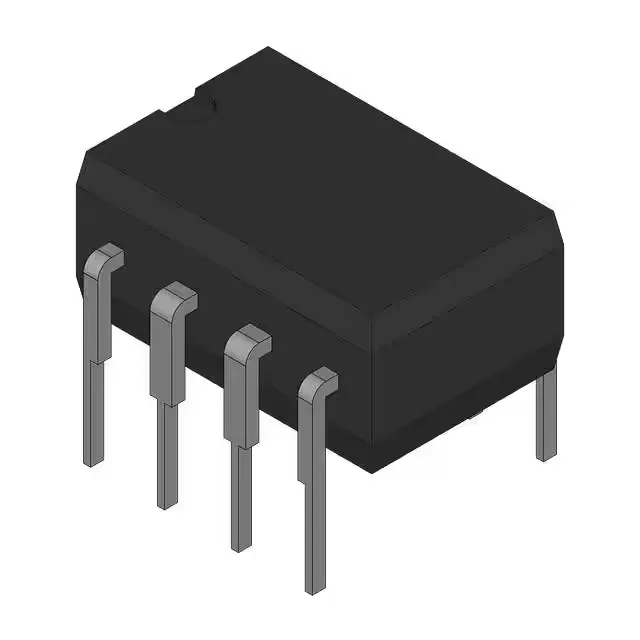
LM741CN/NOPB
Texas Instruments
IC OPAMP GP 1 CIRCUIT 8DIP
MOQ 1 · Tube · RoHS · EIA-481 · DAP/DDP · T/T
Technical specifications
| Parameter / Attribute | Specification / Value |
|---|---|
| Mounting | Through Hole |
| Amplifier type | General Purpose |
| Voltage - input offset | 2 mV |
| Voltage - supply span | 36 V |
| Current - supply | 1.7mA |
| Current - input bias | 80 nA |
| Current - output (Channel) | 25 mA |
| Operating temperature | 0°C ~ 70°C |
| Gain bandwidth product | 1.5 MHz |
| Package | Tube |
| Slew rate | 0.5V/µs |
| Case | 8-DIP (0.300\", 7.62mm) |
| Number of circuits | 1 |
Need Stock or a Drop-in Second-Source for LM741CN/NOPB?
Package: DIP-8 / TO-99 / SOIC-8 · Pin-compatible replacements with immediate Shenzhen spot stock
The 741 is the op-amp: Fairchilds 1968 answer to the LM101, with the compensation capacitor moved inside where no one could get it wrong - which is precisely why it became the standard, taught in every classroom since and still produced by a dozen sources today. Almost everything a modern designer considers a limitation (a slew rate of 0.5V/us, 1MHz of gain-bandwidth, a 1968 noise floor) is the reason it survives where it is used: DC instrumentation, slow control loops, teaching rigs and the legions of legacy industrial boards whose documentation says 741 and will keep saying it. The suffix story is temperature and tolerance grades; the practical story is the NULL pins and the slew ceiling.
Verified Pin-Compatible Replacements (3 verified alternatives)
The Commercial Grade - Mind the Supply Ceiling
Shenzhen Spot Stock (24-48h Dispatch)
Identical circuit guaranteed 0C to 70C instead of the -55/+125C window: the everyday commercial grade of the family.
One grade-specific number to respect: the LM741C absolute-maximum supply is +/-18V against +/-22V for the non-C grades - in rail-riding legacy designs the C part gives up headroom.
The Tight-Offset Grade
Shenzhen Spot Stock (24-48h Dispatch)
The selected grade: input offset around 0.8mV typical / 3mV maximum against the 1-2mV typical / 5-6mV maximum of the plain part - same amplifier, tighter bell curve.
Non-C grade ceiling (+/-22V class) with the wide temperature window.
The Original Numbering, Dozens of Sources
Shenzhen Spot Stock (24-48h Dispatch)
The original Fairchild numbering of the same 1968 design - the second-source row (CA741, MC1741 and the rest) shares the die architecture and the pinout.
Per grade and maker; the classic +/-15V designs everywhere.
Buyer & Quality Checklist for Sourcing Alternatives
- The slew rate is the family ceiling: 0.5V/us (0.25 minimum in the oldest datasheets). Any stage that must move volts quickly will distort here - the number that explains most 741 "sound" and most failed attempts to use it above audio or in fast control loops.
- Grades are temperature and tolerance: LM741C is 0-70C with a +/-18V absolute-maximum supply; the non-C grades carry the wider window and +/-22V. Match both numbers to the design before substituting.
- Offset null lives on pins 1 and 5 with a 10k-class potentiometer (adjustment range about +/-10 to +/-15mV depending on grade): in calibration-sensitive repair, trim after warm-up, and re-trim if the grade changed.
- History worth knowing at the bench: the 741 is the LM101 with the 30pF compensation capacitor moved inside - the design decision that made it universal and the reason none of its successors had to explain compensation to beginners.
- Single-supply use is not native: the 741 expects a split supply (or a derived mid-rail) - dropping it into a single-supply socket designed for an LM358 is a bias-network question, not a substitution.
- Modern replacements are personality changes: TL071 (JFET input, 13V/us), LM358 (single supply, slower but 5V-friendly), NE5532 (audio drive). Each is a design step; the 741 socket is small and the reasons it was chosen were real.
Frequently Asked Technical Questions
Q: What is the difference between LM741 and LM741C?
A: Grade: the C is guaranteed 0-70C with a +/-18V absolute-maximum supply; the non-C grades cover -55 to +125C with a +/-22V ceiling. Same circuit; the numbers decide where each belongs.
Q: Why does the 741 perform poorly in audio or fast circuits?
A: The slew rate: 0.5V/us against 13V/us for a TL071 or 9V/us for an NE5532. It cannot move fast enough for full-scale audio above modest levels or for fast control loops - by design, from 1968.
Q: Can I replace a 741 with an LM358?
A: Not blindly: the 358 is a single-supply part with different input and output swing behavior, slower but 5V-friendly. In split-supply 741 sockets it usually works with attention to the load; in single-supply designs built for the 358, fitting a 741 needs the bias network rethought.