The 10 MHz gain-bandwidth product sets the usable closed-loop gain range: at a gain of 100, the -3 dB bandwidth is about 100 kHz, adequate for most transducer conditioning and audio line-level stages. The 3 V/µs slew rate supports full-power bandwidth up to roughly 48 kHz at 20 V peak-to-peak output, so it can handle fast-slewing signals without distortion in active filters or comparator-like applications. Input bias current of 25 nA is moderate — fine for resistor-divider networks, but high-impedance sources (photodiode, high-Z sensors) will see significant voltage error unless the source impedance is kept below a few hundred kilohms. The 100 µV offset is a strong point for a general-purpose part, reducing the need for a precision trim pot on the BOM.
Package and environment
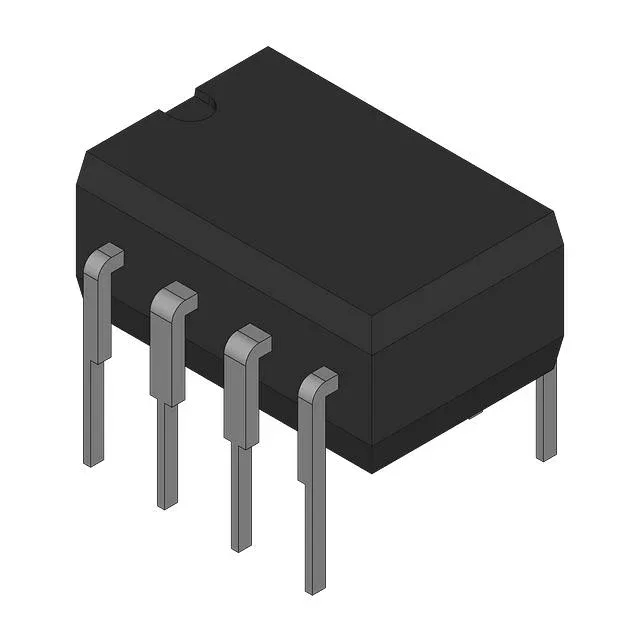
The 8-DIP (0.300" width) through-hole package is breadboard- and protoboard-friendly, and it can be hand-soldered without special equipment. The RoHS status is non-compliant, so verify your assembly's exemption policy if you are shipping to EU or RoHS-regulated markets.
Because it is a through-hole DIP part in an era when many op-amps have migrated to surface-mount, the supply channel is stable but lower-volume — plan your order lead time accordingly, especially if you need a multi-year commitment for a legacy BOM line.