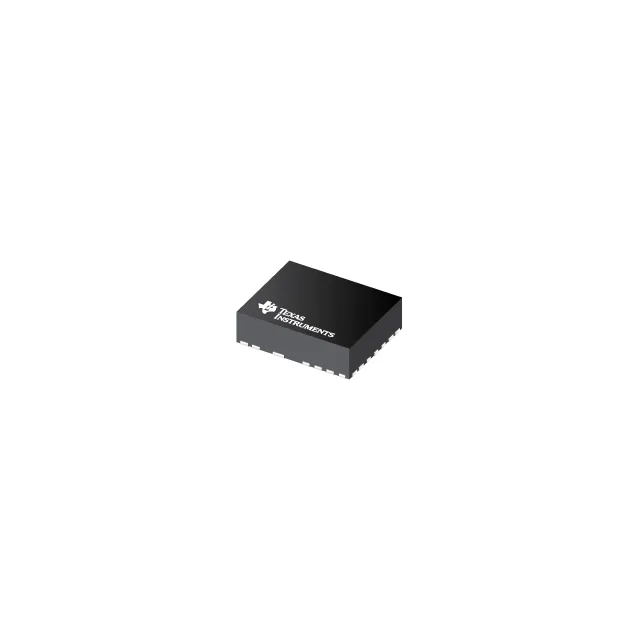
10 A fixed 5 V rail for automotive and industrial step-downs
The Texas Instruments LM61495Q5RPHRQ1 is an AEC-Q100 qualified synchronous buck regulator delivering a fixed 5 V output at 10 A continuous. It accepts a 3 V to 36 V input range, making it suitable for automotive battery-connected rails that must survive load-dump transients and cold-crank dips. The part integrates a synchronous rectifier, so no external Schottky catch diode is needed — that saves a component and shrinks the layout. Switching frequency is programmable from 200 kHz to 2.2 MHz, letting the designer trade inductor size against efficiency. The 16-VQFN package with wettable flank (4.5 x 3.5 mm body) supports automated optical inspection of solder joints, a requirement in automotive production lines.
The synchronous rectifier reduces losses compared to an asynchronous design. At 10 A output, the efficiency gain is significant.
Package and mounting — wettable flank matters for AOI
The LM61495Q5RPHRQ1 comes in a 16-PowerVFQFN with a 4.5 x 3.5 mm body. The wettable flank is a Texas Instruments feature that exposes the side of the QFN pads so a downstream AOI machine can verify solder fillet wetting — without it, hidden solder joints under a QFN are invisible to optical inspection. That is a production-line detail that saves rework cost at high volume.