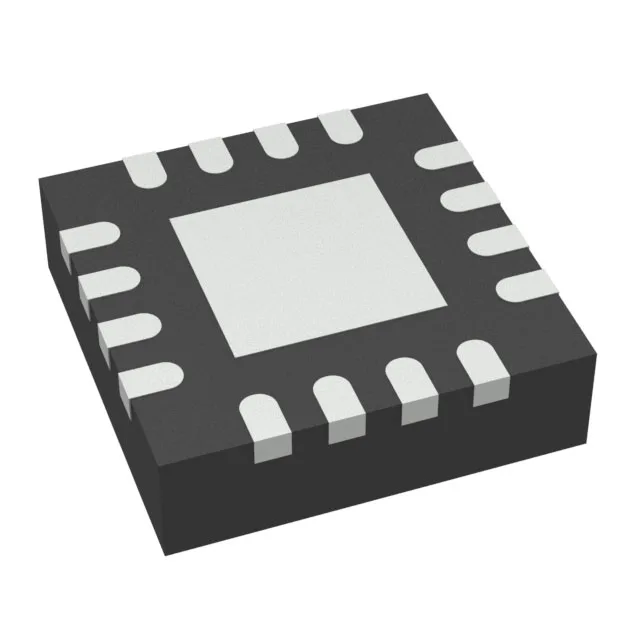
What AEC-Q100 grade and temperature range does it hold?
The LM5158QRTERQ1 carries the Automotive, AEC-Q100 designation — this means it has passed the full suite of qualification stresses (pre- and post-cond, HTOL, HAST, TC, ESD) per the AEC-Q100 specification, with the PPAP documentation chain intact for OEM submission. ROHS3 compliance is confirmed — the part meets the latest EU Directive for hazardous-substance restriction, including the four phthalates added in ROHS3.
Input/output voltage envelope and topology flexibility
The input range spans 1.5 V minimum to 60 V maximum — the 1.5 V floor lets it start from a single-cell alkaline or a deeply discharged Li-ion cell, while the 60 V ceiling covers a 12 V/24 V automotive bus with load-dump transients without needing an external clamp. Output can be adjusted from the 1.5 V reference up to 83 V maximum — this 83 V headroom supports a 48 V telecom bus, a 72 V nominal LED string, or a flyback winding that needs a regulated high-voltage rail. The controller supports boost, flyback, and SEPIC topologies — SEPIC is particularly useful for automotive input where the battery voltage can be above or below the target output (e.g., 12 V input to 12 V output with a diode drop), without the polarity inversion of a buck-boost.
For a boost from 12 V to 24 V at 85% efficiency, the average input current at the limit is roughly 2.8 A, delivering about 28 W output. Switching frequency is programmable from 100 kHz to 2.2 MHz — the lower end suits high step-up ratios where the switch off-time needs to be long enough to transfer energy through the transformer, while 2.2 MHz keeps the magnetics small enough for a 16-WQFN layout but pushes the gate-drive losses up. No synchronous rectifier is integrated — the external diode adds a forward-voltage drop that reduces efficiency at high output current, but simplifies the BOM and avoids the shoot-through risk that plagues synchronous boost stages during start-up.
Package and thermal management for the 16-WQFN
The junction-to-board thermal resistance is typically around 40°C/W with a 1-square-inch pad; without the pad connection the switch current derates sharply above 85°C.
Active lifecycle and sourcing posture
The TPS65261RHBT is a different part entirely — it is a triple-output buck converter with synchronous rectification, a 4.5 V minimum input, and a maximum output of 0.6 V to 3.3 V. It does not share the boost/flyback/SEPIC topology, the 1.5 V minimum input, or the 83 V output capability of the LM5158QRTERQ1. No pin-compatible or functional second-source relationship exists between them.