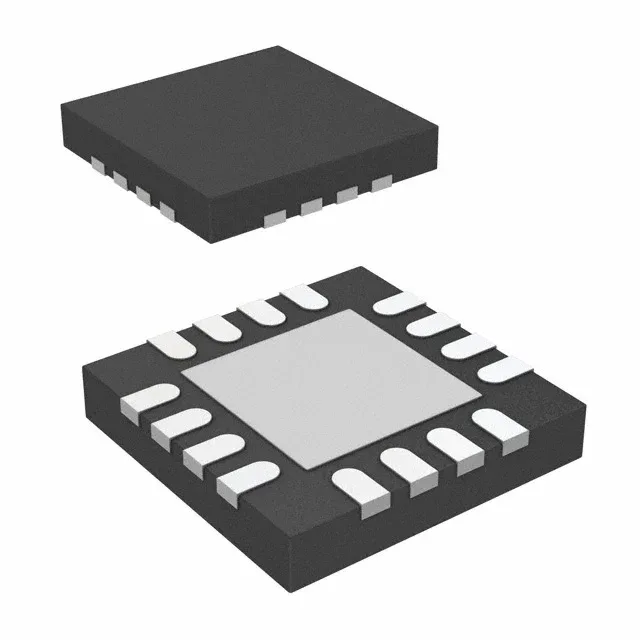
What the wide input range and switching frequency mean for your BOM
The LM5150QURUMRQ1 is a boost controller from Texas Instruments rated for a 1.5V to 42V supply range on Vcc. That span covers a 12V automotive battery during cold-crank dips below 6V and survives load-dump transients without an external clamp — the internal FET's abs-max rating handles the surge. Switching frequency is programmable from 220kHz to 2.3MHz, so you can trade inductor size against switching losses: lower frequency for higher efficiency in a tight thermal budget, higher frequency to shrink the magnetics when board space is the constraint. An engine-bay ECU that sees 125°C on a summer grade still has margin before the thermal shutdown threshold.
Automotive grade and lifecycle — no last-time-buy pressure
No stock-holding claim — quoted per RFQ.
Package and board-fit note for the 16-WQFN
The LM5150QURUMRQ1 comes in a 16-WQFN exposed-pad package measuring 4x4mm. The pad is also the ground return for the power stage, so the via pattern should not create a high-impedance ground loop that couples switching noise into the control circuitry. The 0.5mm pitch on the WQFN demands a solder stencil with good aperture definition to avoid bridging between adjacent pins during reflow.