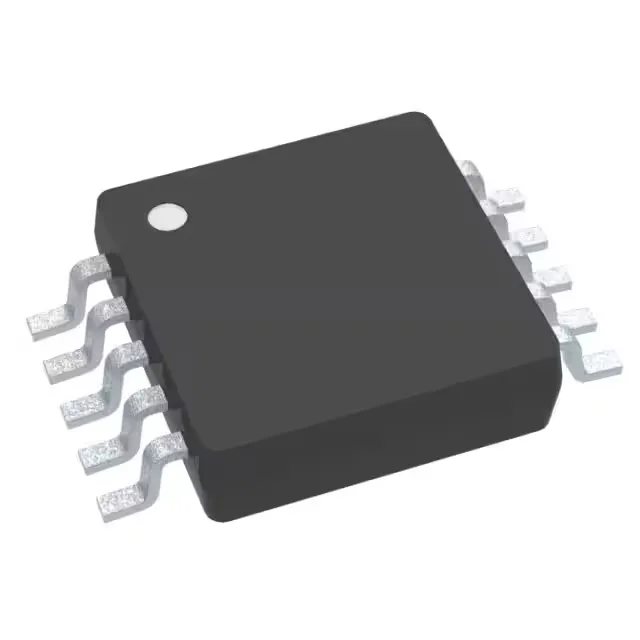
Half-bridge driver with 1.6 A peak output — what it buys the design
That 1.6 A rating is what determines how fast it can charge and discharge the gate capacitance of the switching FETs — enough for medium-power motor drives, DC-DC converters, and inverter stages where you're not pushing into the hundreds of kilohertz. The 118 V maximum bootstrap voltage sets the high-side rail ceiling, so this driver fits designs with bus voltages up to around 100 V with margin. Supply range is 9 V to 14 V, which aligns with standard bias rails from a 12 V auxiliary supply.
600 ns rise/fall — the switching speed trade-off
That means the LM5102MM/NOPB is best suited for applications where switching losses aren't the primary concern — think 20-50 kHz PWM in motor drives or power inverters, not a 500 kHz point-of-load converter. The slower edges also reduce radiated EMI, which can simplify layout and filtering in noisy industrial environments. If you need faster switching, the LM5106MM/NOPB sibling drops rise/fall to 15 ns and 10 ns respectively, but at a lower 1.2 A peak output.
The 10-VSSOP package (3.00 mm width, 0.118" pitch) is a compact surface-mount footprint that fits tight PCB layouts. Non-inverting inputs and independent channel control give flexibility for driving both high-side and low-side FETs in a half-bridge configuration.