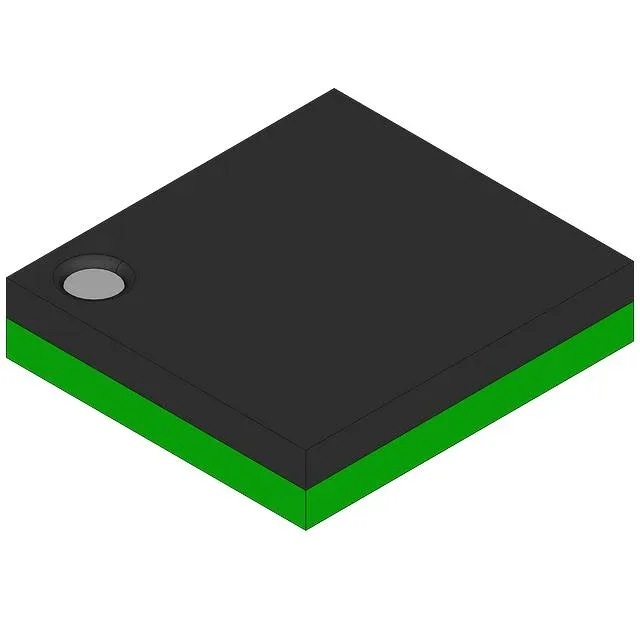
Class D audio amp with digital volume control — what this part does
Volume control is handled digitally over I²C or SPI, which means the gain is set in the digital domain — no analog pot, no wiper noise, and the setting survives a mute/unmute cycle. The part also includes a 3D enhancement, depop circuitry to suppress startup clicks, and thermal protection.
Output power split — why the mono and headphone ratings matter
The 1.19W mono channel at 8Ω is sized for a small speaker in a portable dock or handheld device — think a Bluetooth speaker or a toy. The 87mW stereo headphone output at 32Ω covers standard consumer headphones. If your design only needs a speaker, the headphone outputs can be left floating; if you need more headphone power, this part is not the right fit — look at a dedicated headphone amp instead.
I²C and SPI volume control — what it buys you
Digital volume control over I²C or SPI means the host microcontroller sets the gain in discrete steps, with no external potentiometer or variable resistor. The mute and shutdown functions are also bus-controlled, so the system can cut audio instantly without a separate GPIO. The depop feature ramps the output on startup to avoid the thump that otherwise hits the speaker — important for battery-powered devices where the amp is turned on and off frequently to save power.
The Class D architecture keeps efficiency high, so heat dissipation is low even at full output, which helps in sealed enclosures.
There is no official second-source or pin-compatible replacement listed; if you need an alternative, the closest functional match would be another Boomer® series Class D amp with I²C/SPI volume control, but verify the package and output power ratings against your BOM.