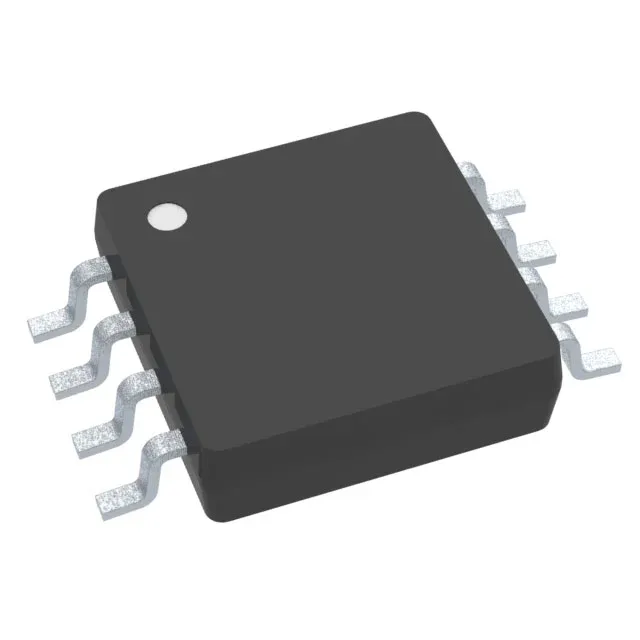
Texas Instruments LM4871MMX/NOPB — Analog & Data Acquisition

LM4871MMX/NOPB Class AB Audio Amplifier, 3W Mono, 8-VSSOP

MPNLM4871MMX/NOPB
Active

Texas Instruments Boomer® LM4871MMX/NOPB, Class AB audio amplifier, 1-channel mono, 3W x 1 @ 3Ω, 2V ~ 5.5V supply, -40°C ~ 85°C, surface mount 8-VSSOP package.

$1.5300Ref. price · indicative, final on quote
Independent supplier — new & surplus stockAuthenticity-screened · ESD-safe packingListing updated Jul 2026

Specifications

LM4871MMX/NOPB specifications
ParameterValue
TypeClass AB
SeriesBoomer®
Output type1-Channel (Mono)
MountingSurface Mount
Supply voltage2V ~ 5.5V
Max output power x channels @ load3W x 1 @ 3Ohm
Operating temperature-40°C~85°C(TA)
PackageTape & Reel (TR); Cut Tape (CT)
FeaturesShutdown, Thermal Protection
Case8-TSSOP, 8-MSOP (0.118\", 3.00mm Width)

Product details

3W into 3Ω — the output rating that sets the application

The LM4871MMX/NOPB is a Texas Instruments Boomer® series Class AB audio amplifier delivering 3W into a 3Ω load from a single channel. That 3W figure is the headline spec — it tells you this part is sized for a small speaker or transducer in a portable or battery-powered device, not a line-level preamp or a multi-channel home audio system.

Supply rails: 2V to 5.5V — fits 3.3V and 5V systems

The supply range runs from 2V to 5.5V, which means it runs cleanly off a single 3.3V or 5V rail without needing a separate audio supply. That simplifies the power tree on a portable PCB — one regulator feeds both the digital core and this amplifier. At 3.3V the output power will be lower than the rated 3W at 3Ω, but the part still operates within its linear region.

Frequently asked questions

Can LM4871MMX/NOPB be used in a 3.3V system?

Yes. The supply range is 2V to 5.5V, so a 3.3V rail is well within the operating window. Output power will be lower than the 3W rating at 5V, but the amplifier remains fully functional.

Can LM4871MMX/NOPB drive a 3 ohm load?

Yes, the 3W output power is specified into a 3Ω load. That is the rated condition — the amplifier is designed to drive that impedance.