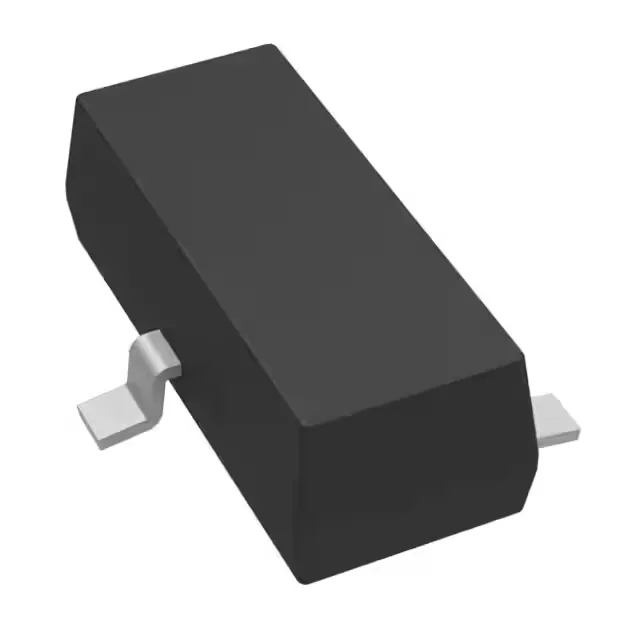
Texas Instruments LM4050AEM3-10/NOPB — Analog & Data Acquisition

LM4050AEM3-10/NOPB Shunt Voltage Reference

MPNLM4050AEM3-10/NOPB
End of Life

Texas Instruments LM4050AEM3-10/NOPB precision shunt voltage reference, fixed 10V output, ±0.1% tolerance, 50ppm/°C, 15mA output, SOT-23-3, -40°C to 125°C.

$3.44Ref. price · indicative, final on quote
PackagingTO-236-3, SC-59, SOT-23-3
RoHSROHS3 Compliant
Independent supplier — new & surplus stockAuthenticity-screened · ESD-safe packingListing updated Aug 2026

Specifications

LM4050AEM3-10/NOPB specifications
ParameterValue
Output typeFixed
MountingSurface Mount
Reference typeShunt
Voltage - output (Min (Fixed))10V
Output current15 mA
Current - cathode110 µA
Operating temperature-40°C ~ 125°C (TA)
PackageTape & Reel (TR); Cut Tape (CT)
Tolerance±0.1%
CaseTO-236-3, SC-59, SOT-23-3
Noise - 10Hz to 10kHz150µVrms
Temperature coefficient50ppm/°C

Product details

Precision 10 V shunt reference in a SOT-23-3

As a shunt reference, the LM4050AEM3-10/NOPB behaves like a precision Zener diode: it requires a series resistor from the supply to bias the cathode with at least 110 µA (the minimum cathode current) while the output can source up to 15 mA to the load. This topology is simple and robust — no separate supply pin, and the reference can sink current from a higher-voltage rail. The trade-off is that the series resistor must be sized to maintain the minimum cathode current across the full load and supply range, which adds a design step compared to a series reference.

Frequently asked questions

What is the current consumption of LM4050AEM3-10/NOPB?

The minimum cathode current required to maintain regulation is 110 µA, and the output can source up to 15 mA to the load.

How does LM4050AEM3-10/NOPB compare to LM4050AEM3-5?

The LM4050AEM3-10/NOPB outputs 10 V, while the LM4050AEM3-5 outputs 5 V. Both share the same SOT-23-3 package, ±0.1% tolerance, and 50 ppm/°C drift, so they are footprint-compatible but not drop-in replacements — the series resistor and load design must be recalculated for the different output voltage.