Its output is set with two external resistors to any voltage between 1.233 V and 10 V. The ±1% initial tolerance and 150 ppm/°C temperature coefficient define the accuracy budget for the system — if your ADC or comparator needs better than 1% over temperature, this part sets the floor you design from.
Temperature range and drift — the long-term stability anchor
The 150 ppm/°C drift means a 1.233 V output can shift by roughly 185 µV over a 100°C swing — within tolerance for a 10-bit ADC with a 2.5 V reference, but tight for a 12-bit system without calibration. If your design holds a calibration constant at room temperature and expects it to hold across the full range, budget that drift into the error stack.
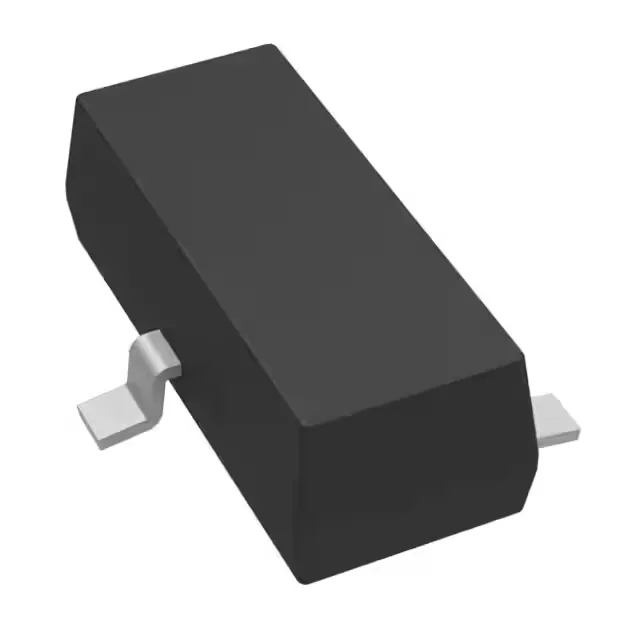
Package and footprint — what the SOT-23-3 means on the board
The SOT-23-3 (TO-236-3, SC-59 compatible) footprint is a standard three-lead layout shared across many shunt references and small-signal transistors. No exposed pad, no thermal vias — the dissipation is handled through the leads and the small body.
The base product number LM4041 covers a family of fixed and adjustable shunt references in various tolerances and packages — the DQDBZT variant is the adjustable ±1% grade in SOT-23-3. For dual-sourcing, the LM4041 family includes pin-compatible options from multiple manufacturers sharing the same SOT-23-3 footprint and 1.233 V nominal output.