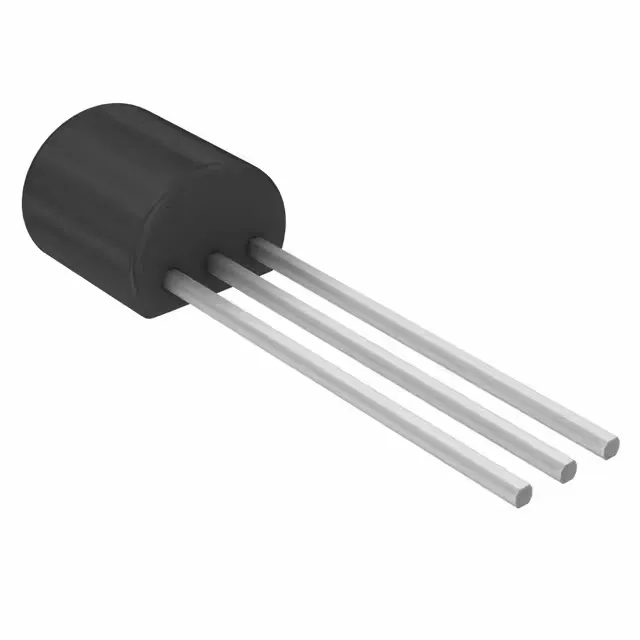
The LM4041CILPE3 is an adjustable shunt voltage reference from Microchip Technology — the same die as the fixed-output LM4041 variants but with the feedback node brought out so you set the output with two external resistors. Minimum output is 1.233 V, maximum is 10 V, set by the resistor divider ratio. Being a shunt reference, it behaves like a two-terminal Zener: you bias it through a resistor from the supply rail, and the device shunts enough cathode current (80 µA typical) to regulate the output. No separate supply pin — the load and the reference share the same current path. The TO-92-3 through-hole package is the breadboard-friendly, hand-solderable form factor you see on evaluation boards and legacy industrial control cards. The three leads are cathode, anode, and the adjust pin — same pinout as the LM4041 fixed-voltage parts.
±0.5% initial tolerance — where it lands in the LM4041 family
The 'C' in LM4041CILPE3 marks the ±0.5% initial accuracy grade. That sits between the 'A' grade (±0.1%) and the 'D' grade (±1%). For a 2.5 V output, ±0.5% means ±12.5 mV worst-case at 25 °C — tight enough for an 8-bit ADC reference or a comparator threshold, not tight enough for a 12-bit SAR reference without calibration. If the BOM calls for an LM4041DILP (±1%), the LM4041CILPE3 drops straight in — same pinout, same TO-92-3 package, same operating conditions. The only trade is cost: the tighter bin carries a small premium, but you gain margin on the reference accuracy without a board spin.
No last-time-buy notice, no end-of-life window to plan around.