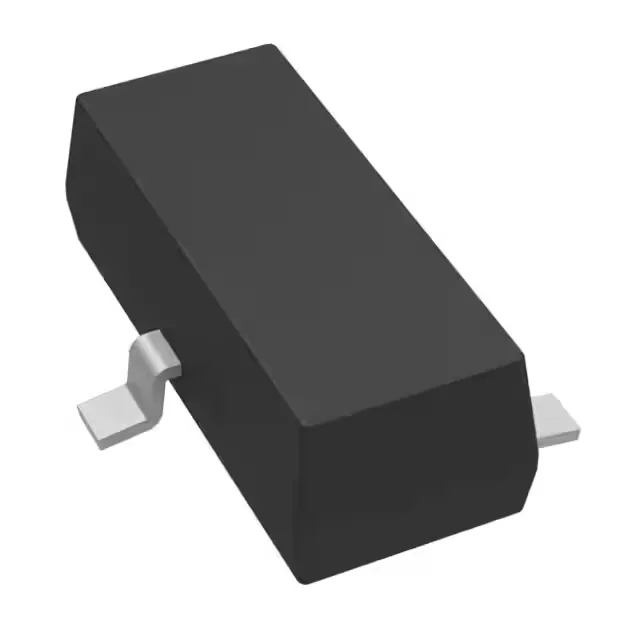
Shunt reference for precision bias and ADC rails
It uses a two-terminal shunt topology — the same class as the industry-standard LM4041 family — where the reference current is set by an external series resistor between the supply and the cathode pin. The output is adjustable via an external resistor divider from a minimum of 1.233 V up to 10 V. For a 1.233 V output, that drift works out to roughly 12.3 mV worst-case across the full span — enough to matter in a 12-bit ADC reference path but acceptable for general-purpose comparator thresholds and bias supplies.
Biasing and load limits
The external series resistor must be sized to deliver between those limits across the full input voltage range and load variation. A 1 kΩ resistor from a 5 V rail, for example, biases the reference at roughly 3.8 mA — well within the operating window and leaving headroom for transient loads. Wideband noise is specified at 20 µVrms over the 10 Hz to 10 kHz band — a clean enough floor for most 10- to 12-bit ADC references, though a lower-noise series reference would be preferred for 16-bit or higher-resolution signal chains.