Fixed 1.225 V shunt reference for precision bias and ADC reference
The Texas Instruments LM4041C12IDBZTG4 is a fixed-output shunt voltage reference delivering 1.225 V with a ±0.5% initial tolerance. As a shunt (two-terminal) reference, it behaves like a precision Zener diode — it regulates the voltage across itself by shunting current through an external resistor to ground. This topology makes it simple to use in applications where a stable, low-cost reference voltage is needed, such as biasing an ADC reference input, setting a comparator threshold, or providing a precision voltage for a DAC.
The temperature coefficient is rated at 100 ppm/°C, which means the output voltage shifts by about 122.5 µV for every 10°C change. The 20 µVrms noise (10 Hz to 10 kHz) is low enough that the reference itself does not dominate the noise floor in most precision analog chains.
12 mA output drive and 80 µA minimum cathode current
The LM4041 can source up to 12 mA of output current, which is enough to drive the reference input of a typical SAR ADC or a small resistive load. The minimum cathode current is 80 µA, so the external series resistor must be sized to keep at least that much current flowing through the device at all times — including at minimum supply voltage and maximum load. This is the same design step as biasing any shunt reference: the resistor value sets the total current (load + reference), and the 80 µA floor ensures the reference stays in regulation.
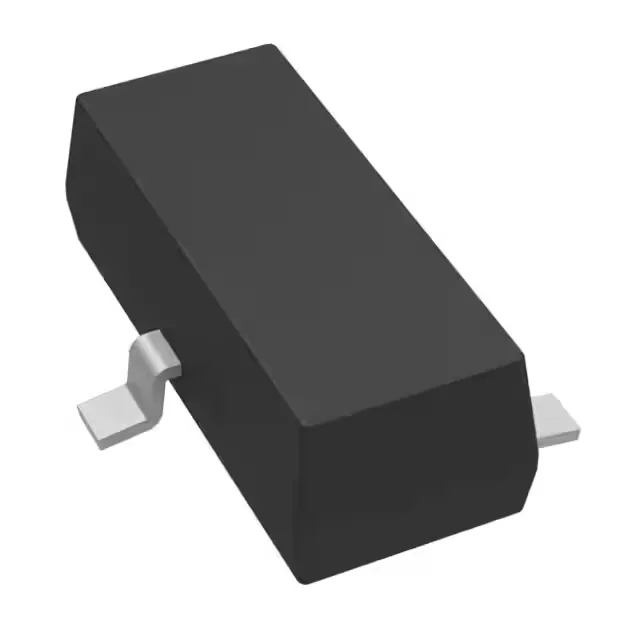
SOT-23-3 package — a common footprint for compact designs
This three-pin package is widely used for small-signal diodes, transistors, and references, so the footprint is familiar to layout engineers. The small body size suits space-constrained PCBs in portable or industrial equipment.