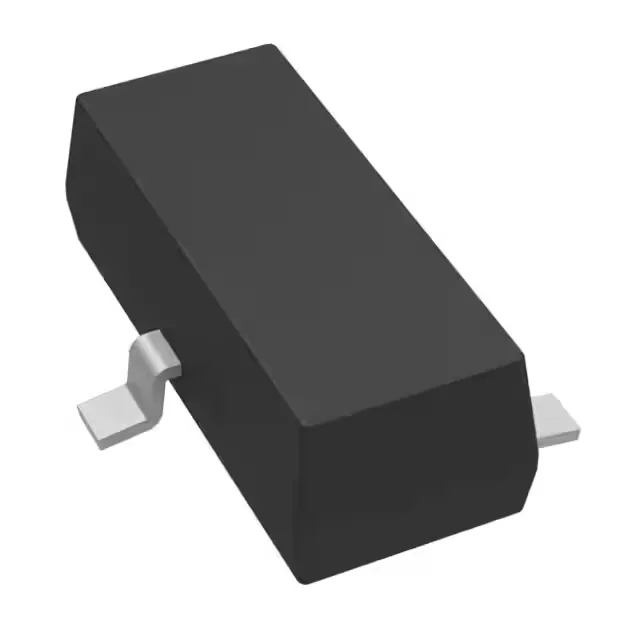
The Texas Instruments LM4041C12IDBZR is a precision shunt voltage reference delivering a fixed 1.225V output with ±0.5% initial tolerance. It operates as a two-terminal shunt (Zener-like) device, requiring only a series resistor from the supply to set the bias current — no external pass transistor. The 80 µA minimum cathode current keeps the reference biased even in low-power rails, while the 12 mA maximum output current allows it to supply small loads directly or serve as a stable reference for an ADC or comparator.
The ±0.5% initial tolerance means the output voltage at 25°C is guaranteed within 1.225V ±6.1 mV. For a 12-bit ADC with a 1.225V reference, that combined error budget is roughly ±1.5 LSB — acceptable for many industrial measurements but worth derating if the system targets 0.1% overall accuracy.
Cathode current and output drive — sizing the bias resistor
The LM4041C12IDBZR needs a minimum of 80 µA flowing into the cathode to maintain regulation. The series resistor from the supply to the cathode must be chosen so that (Vsupply − 1.225V) / R is at least 80 µA plus any load current drawn from the reference output. With a 5V supply and no load, a 47 kΩ resistor sets the bias at about 80 µA. If the reference also powers a small load (e.g., an op-amp input), the resistor value must drop to keep the total current above 80 µA while staying below the 12 mA maximum output.