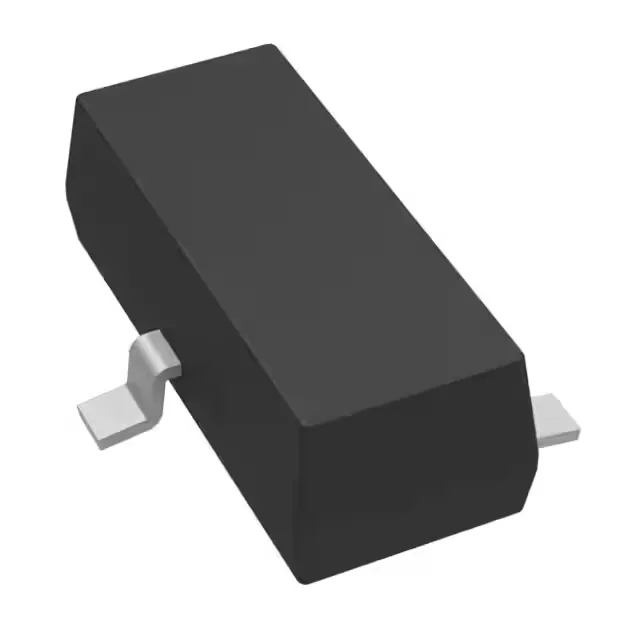
It provides a stable 5 V output with ±1% initial tolerance and requires only a single external resistor to set the bias current — the cathode current floor is 88 µA, and the reference can sink up to 15 mA while maintaining regulation. The shunt topology means it behaves like a precision Zener: the load and the reference share the same current path, so the external resistor must be sized to deliver the sum of the load current and the minimum cathode current across the full input voltage range. This makes it a simple, low-component-count choice for generating a local 5 V rail in an ADC reference, comparator threshold, or regulator feedback divider.
Temperature range and noise — design-in constraints
The temperature coefficient is 150 ppm/°C, which translates to a worst-case 0.75 mV shift per °C at the 5 V output — acceptable for 8- or 10-bit ADC references but worth derating for 12-bit systems that lack calibration. In a precision measurement chain, this noise floor may need a bypass capacitor (typically 0.1 µF to 1 µF) at the reference output to keep the ADC's SNR within budget. The shunt architecture's AC impedance is low, so the capacitor does not destabilise the reference the way it can with a series regulator.
It is no longer in factory production, so new orders are fulfilled through independent distribution and surplus inventory channels.