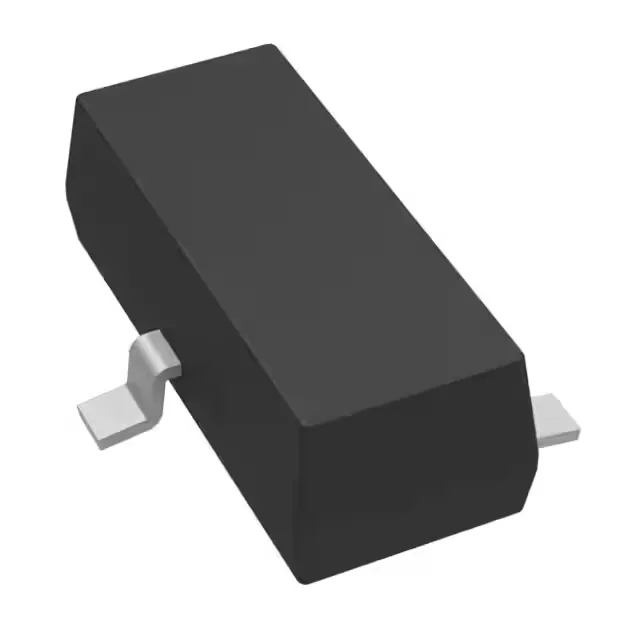
5V fixed shunt reference — the BOM anchor for precision bias
As a shunt reference, it requires only a single external resistor to set the bias current — no output capacitor needed for stability. The 95 µA minimum cathode current keeps the quiescent draw low, while the 15 mA output current capability can bias multiple downstream stages or an ADC reference input.
Noise floor and temperature drift — what they mean for measurement accuracy
The 80 µVrms noise over 10 Hz to 10 kHz sets the noise floor for the reference voltage. In a 5V system, this corresponds to roughly 16 ppm of the output — acceptable for 12-bit ADC references but worth derating for 16-bit designs where the LSB is below 80 µV. For a 5V rail, that is 150 ppm per °C — a typical grade for cost-optimised precision references. If tighter drift is needed, the LM4040A or LM4040B variants (0.1% and 0.2% tolerance respectively) offer lower TC options within the same family.
SOT-23-3 footprint — layout and supply-chain fit
The SOT-23-3 package (TO-236, SC-59 compatible) is a standard three-pin footprint that fits easily on 2-layer boards. The cathode, anode, and no-connect pins match the pinout of most shunt references in this class, simplifying a last-minute alternate qualification. The ±1% tolerance grade is the most widely stocked variant in the LM4040 family, which improves availability across distribution channels.
For BOM resilience, the LM4040 family spans multiple tolerance grades (0.1% to 1%) and output voltages (2.5V, 3.0V, 4.096V, 5V). The 5V 1% grade is the most common tier, meaning alternate distributors and date-code lots are easier to source compared to tighter-tolerance variants.