5 V shunt reference — what it is and how it works
It uses a shunt (two-terminal Zener-like) topology, so it needs no separate supply pin — just a series resistor from the positive rail to the cathode, with the output taken at the cathode. The reference draws a minimum of 95 µA cathode current to maintain regulation, and can source or sink up to 15 mA of load current. Tolerance is ±1% at 25 °C, with a temperature coefficient of 150 ppm/°C over the -40 °C to 85 °C industrial temperature range.
Tolerance and noise — what ±1% and 80 µVrms mean for your design
A ±1% initial tolerance on a 5 V output means the actual voltage at 25 °C can be anywhere from 4.95 V to 5.05 V. That is tight enough for an 8-bit ADC reference or a comparator threshold, but marginal for a 12-bit system without calibration.
Package and mounting — through-hole TO-92-3
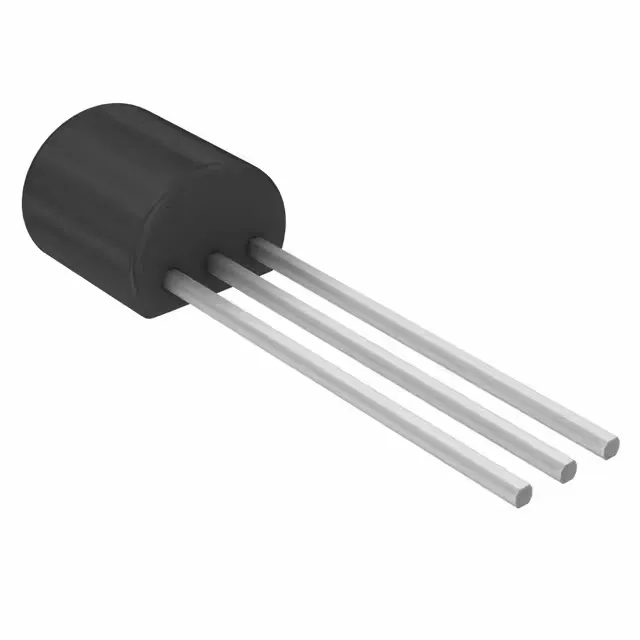
The LM4040D50ILPR comes in a TO-226-3 / TO-92-3 package with formed leads, intended for through-hole mounting. The supplier device package is TO-92-3. This package is common in industrial control boards, power supplies, and test equipment where hand-assembly or socketing is preferred over SMD reflow. The formed leads suit both vertical and horizontal board mounting.
It is ROHS3 compliant. No LTB risk on this BOM line.