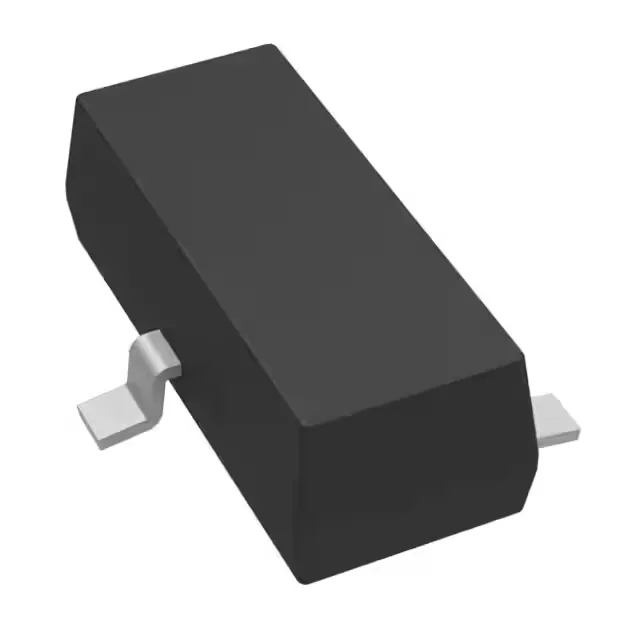
Fixed 5V shunt reference in SOT-23-3
It operates as a two-terminal shunt device — essentially a low-drift Zener diode — requiring only a series resistor from the supply to set the bias current. The SOT-23-3 package fits tight PCB layouts where a dedicated reference IC in a larger SOIC or MSOP would consume board area better used for signal routing.
95 µA cathode current — the bias floor
The minimum cathode current is 95 µA, which sets the lower bound for the series resistor value. For a 12V rail feeding the reference, the resistor sees (12V - 5V) = 7V across it; at 95 µA that is roughly 74 kΩ. Running the cathode current higher — up to the 15 mA output rating — improves dynamic impedance and noise rejection but adds to the system power budget. The 80 µVrms noise spec (10 Hz to 10 kHz) is typical for a shunt reference at moderate bias; for noise-critical ADC front-ends, a larger cathode current or a post-filter cap helps.
150 ppm/°C drift and industrial temperature range
That is adequate for a 12-bit ADC reference where the LSB is around 1.2 mV at 5V full-scale, but marginal for 14-bit or higher systems without calibration. The operating temperature range covers industrial environments — motor drives, PLC I/O modules, base station power supplies — but does not extend to the -55°C or +125°C extremes required for avionics or under-hood automotive.