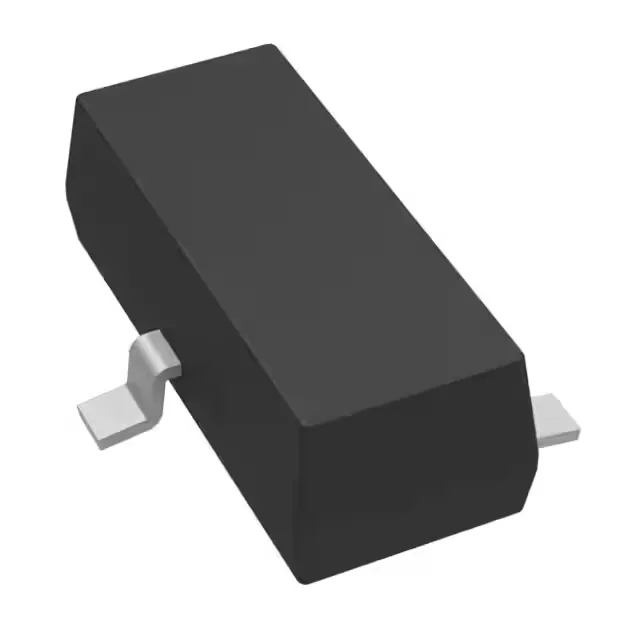
The Texas Instruments LM4040D20QDBZT is a precision shunt voltage reference delivering a fixed 2.048 V output with ±1% initial tolerance in a SOT-23-3 package. The 2.048 V level is a natural match for ADC and DAC reference inputs that expect a binary-friendly voltage — 2.048 V corresponds to a full-scale of 4096 counts on a 12-bit converter, making scaling arithmetic simple. As a shunt reference, it behaves like a two-terminal Zener diode: a series resistor sets the bias current from the supply rail, and the device regulates by sinking current through the cathode path. The cathode current floor is 80 µA, which means the external resistor must be sized to deliver at least that much current at the minimum supply voltage plus load current. Output current capability is 15 mA, enough to bias multiple converter reference inputs or a small resistive divider string.
Temperature drift and noise — the real accuracy limiters
The temperature coefficient is 150 ppm/°C. A system that needs better than ±1% absolute accuracy across temperature must either calibrate at temperature or move to a lower-drift reference. The noise spec is 35 µVrms over a 10 Hz to 10 kHz bandwidth — clean enough for a 12-bit ADC at 2.048 V reference (LSB = 500 µV) but marginal for 16-bit converters where the LSB is 31.25 µV. For a 16-bit design, the reference noise alone consumes the entire LSB budget; a lower-noise series reference would be a better fit.
Package and marking — counterfeit screen points
The part is supplied in SOT-23-3 (TO-236-3 / SC-59 compatible). For a buyer vetting gray-market stock, the first check is the laser etch font: Texas Instruments uses a consistent character shape and spacing across its SOT-23 references. A re-marked part often shows a shallow or uneven etch, or the font does not match the TI plant's standard for that date-code week. The ROHS3 compliance marking (per) should also be present. If the marking looks sanded or the tape-and-reel label lacks a TI factory barcode, that lot needs decap X-ray before it goes near a production line.